

 LinkedIn
An AEO platform can look cheap on the demo and expensive by domain 11. I watched the same trick play out in PPC: agencies sold predictable retainers, then paid for delivery with unpredictable hours. If you package AEO at $3,500 to $5,000 a month, compare vendors on what it costs to serve 10 or more client domains, not the number of green checks on a feature slide. Put vendors in columns, the 21 questions below in rows, and require written answers. A monitoring dashboard is not a delivery team, however convincingly it draws arrows between them.
Pricing: find the bill behind the demo
- Is the fee flat per domain, or metered by usage? Model the bill at the query volume you would use for a real client, not the volume included in a starter demo. Agencies packaging AEO services target 65% to 75% gross margins; prompt runs, API credits and seats can eat into that margin after you have already priced the retainer. Peec AI’s published tiers illustrate why the included prompt allowance matters as much as the headline fee. Walk away: the vendor cannot price your expected usage in writing.
- What caps apply to prompts, keywords and engines in each workspace? Ask whether the allowance covers all engines together, whether prompts run daily, and what happens when you exceed it. Profound’s $99 Starter tier has been listed with 50 prompts on ChatGPT; that is a different buying proposition from broad, daily tracking across clients. Walk away: the cap falls below your proposed coverage, or the vendor will not explain how prompts are counted. A plan name is not a capacity estimate.
- What does domain 11 cost compared with domain 1? Request an itemised quote for one, five, ten and eleven client domains, including workspaces, users and reporting access. A published breakdown of Profound’s agency pricing shows why a base fee can be the least interesting number on the page. Walk away: every additional client triggers a surcharge that breaks your retainer economics, with no predictable volume pricing. I used to see this in percentage-of-spend PPC billing. Different meter; same leak.
- Are setup fees, minimum terms or annual commitments mandatory? Get the cancellation terms and any non-refundable onboarding charge alongside the monthly quote. A platform that needs months of payments before you can prove delivery transfers its risk to your agency. Ask whether you can test it live on an active client domain first. Walk away: a mandatory 12-month commitment, a non-refundable setup fee above $1,000, or no practical route to a live seven-day proof. If the contract outlasts your ability to verify the work, the price is not just the subscription.
Execution: ask who makes the change
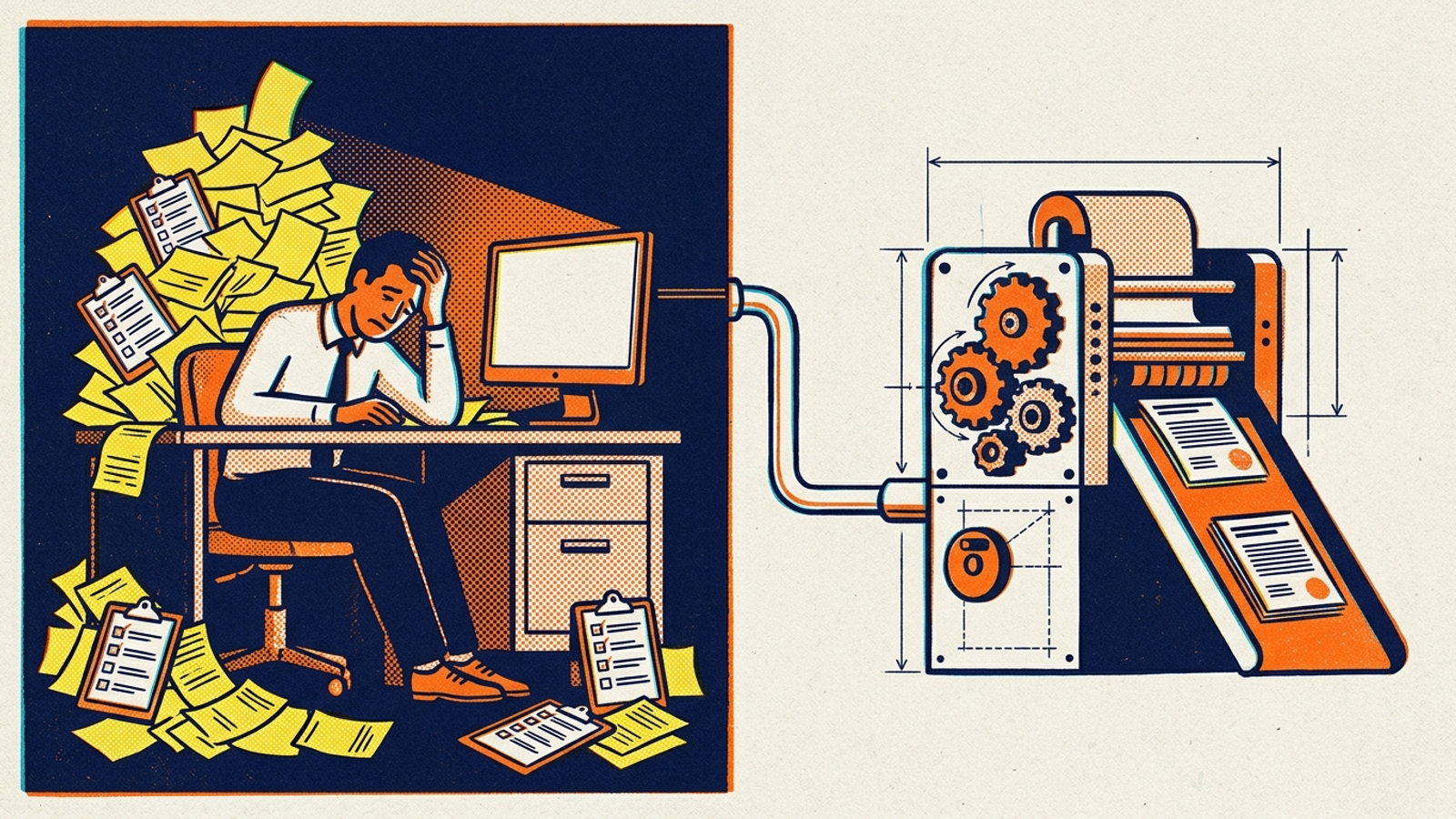
- Does the platform publish answer-first content, or only draft it? Have the vendor demonstrate a change moving from a query gap to a live page, including formatting, approval and publication. A paragraph inside a chat window is not a published answer hub. If your team must copy, stage and publish thirty articles across ten domains, put those hours in the cost of goods sold. Walk away: the handoff is a CSV, a Markdown export or a task for your account manager. This is the question most likely to make a cheap tool expensive.
- Does it ship technical fixes, or create a ticket backlog? Ask for the deployment path for schema, canonicals and entity-related page changes on a site your agency does not control. A dashboard can correctly flag missing markup and still leave you doing the work. The hard part is often shipping AEO fixes on client sites you don’t control, not identifying them. Walk away: every fix ends in an audit recommendation that your team must translate into a developer request.
- How does it handle off-site citations and brand mentions? Ask what work the platform performs beyond your client’s pages, which directories or third-party placements are in scope, and who approves outreach or profile changes. On-site copy alone cannot do off-site work. Do not accept an authority score as a substitute for a list of actions and owners. Walk away: the vendor describes citation gaps but offers no way to act on directory profiles, third-party mentions or other off-page opportunities within the service you are buying.
- Can paid search data inform organic AEO priorities? Your agency may already know which transactional queries convert from Google Ads. Ask whether the platform can use that information when choosing organic work and whether it connects changes to conversion feedback. Otherwise, you pay to rediscover queries you already bought and analysed. Walk away: paid and organic live in disconnected systems, and your team must reconcile them by hand. At groas, paid and organic search sit in one operating model; make other vendors explain their handoff just as plainly.
Deployment: prove the path to a live client site
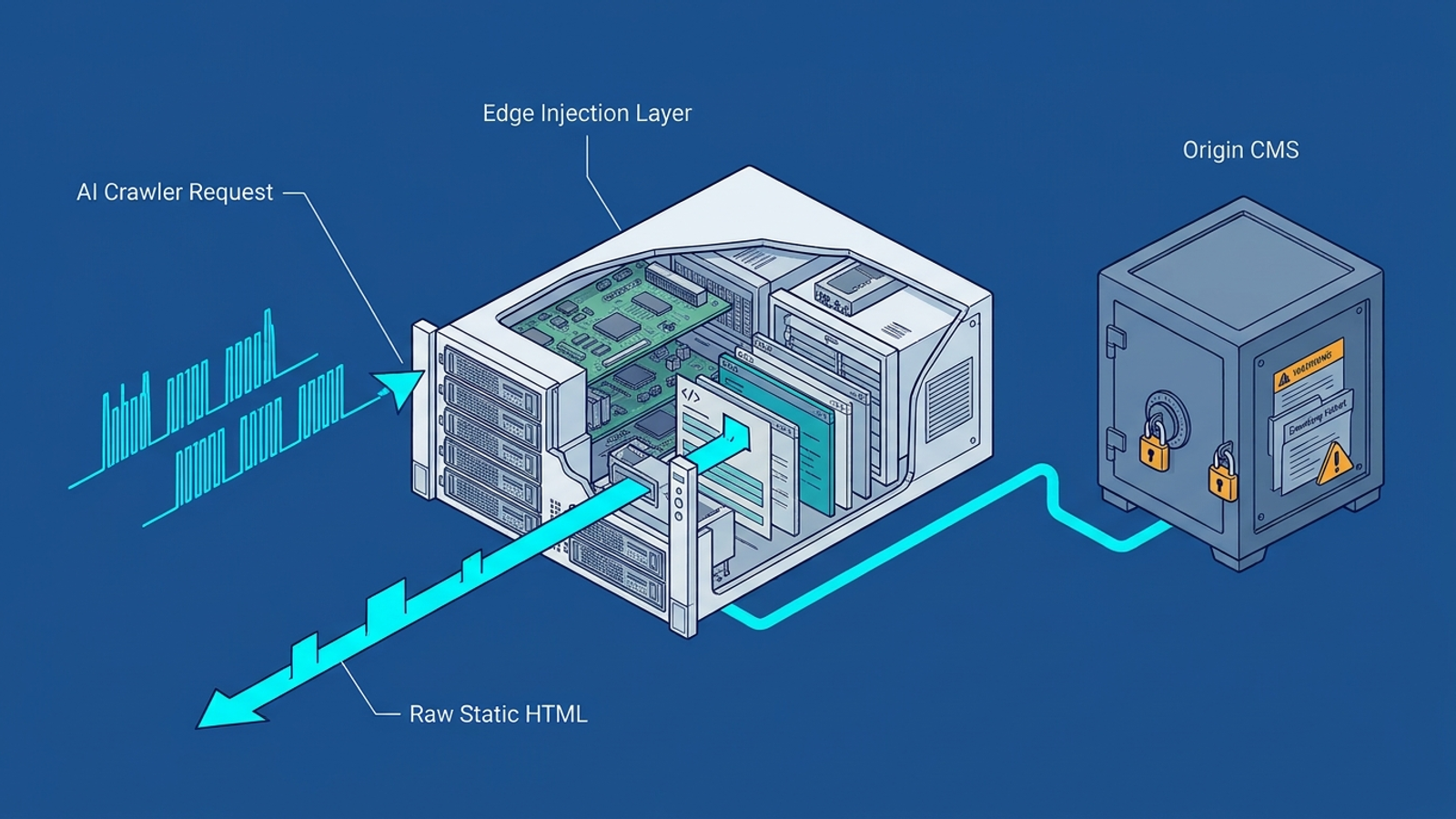
- Can your team deploy changes without waiting on each client’s developer queue? Ask for the actual permissions, DNS or CDN access, approvals and rollback steps required on a typical client site. Edge SEO with Cloudflare Workers and HTMLRewriter is one possible deployment approach; it does not mean you can skip client authorisation. For an agency planning a rollout across 10 or more domains, the repeatability matters more than the architecture diagram. Walk away: every routine update requires a bespoke theme edit or developer pull request.
- Does the change appear in the server response, or depend on client-side JavaScript? Ask the vendor to show the delivered HTML and markup, not just a browser screenshot. Rendering differs across crawlers, so claims that every bot sees a tag added by front-end JavaScript need proof. This discussion of crawler visibility captures the practical concern. Walk away: the vendor cannot demonstrate that the content or schema reaches the crawlers it claims to serve.
- How does it check whether crawlers can get through the CDN or firewall? A permitted
robots.txtentry does not guarantee a request gets past security rules. Ask whether the platform checks responses and available server logs, and how it distinguishes a crawler from a spoofed user agent. A green status light based on a synthetic ping can hide a blocked bot. Walk away: its entire access test consists of sending a request with a crawler name in the user-agent field. Require evidence from the delivery path, not confidence from a test button. - How long from client signature to the first live change? Get a timeline with dependencies assigned: what the client supplies, what your team does and what the vendor does. The point of onboarding without touching the CMS is to shorten the wait for visible work, not to rename provisioning as progress. Walk away: the vendor promises a fast launch but cannot identify what will be live within 48 hours, or every launch depends on an open-ended IT queue.
White-label reporting: make it yours and make it explainable
- Which engines does the platform track in the plan you are buying? List ChatGPT, Claude, Perplexity, Gemini and Google AI Overviews on the order form, then mark what is included and what costs extra. One engine cannot stand in for a client’s whole search footprint. Walk away: the useful cross-engine view appears only after an upgrade you did not budget for, or reporting is limited to one engine while the sales deck implies broader coverage. Buy the coverage you intend to report, not the coverage suggested by screenshots.
- What does “white-label” cover beyond a PDF logo? Request a client-facing walkthrough of the portal, login screen, domain, email digests and isolated workspaces. White-label platform packages can differ sharply in what they include. If the client sees vendor branding every time they check progress, your agency is not fully presenting the service under its own name. Walk away: a re-badged export is the entire offering, or the portal and email branding you need require an unpriced enterprise upgrade.
- Can the platform show an action log, not just a visibility score? Ask to see a chronological record tying a query or citation gap to the content, code or schema change made in response. Your strategist should be able to explain what changed and why before a client asks. A score that rises or falls without an accompanying work record creates another reporting task, not accountability. Walk away: the only answer to “What did you change?” is a proprietary graph. Keep the underlying change record accessible to your team.
- Can your strategists extract the data they need? Ask for API access, exports or an open integration such as MCP, and test a routine question across client accounts. The point is not to add another fashionable acronym to the proposal. It is to avoid opening twenty dashboards to find which campaigns lost citations this week. Walk away: the vendor locks useful records inside its interface and offers no practical extraction route. Your agency needs its own view of the work it is selling.
Ownership and contract terms: identify who carries the risk
- Is there a named strategist, or just a support queue? Ask who reviews direction, sets guardrails and owns an issue when citations fall across client accounts. Software that produces recommendations can still leave all interpretation and client explanation to your payroll. groas pairs autonomous paid and organic search execution with a named human strategist; that is the kind of ownership I would ask any vendor to define. Walk away: no senior operator is accountable for the work behind the dashboard.
- Can your agency set guardrails before changes go live? Ask how the platform handles approved claims, tone, landing-page directories, conversion definitions and review requirements. Autonomous execution without controls turns speed into an approval problem. A mistaken price or certification on a client page is still your client relationship to repair. Walk away: the system can publish changes but cannot enforce configurable rules or hold sensitive changes for approval. A faster route to production only helps when you can control what takes that route.
- Do the contract and system isolate client data? Read the terms for CRM inputs, benchmarks and positioning documents, especially if you serve clients with strict confidentiality requirements. Ask what data enters shared models, what stays within a client workspace and what happens when the account closes. Walk away: the terms permit proprietary client inputs to be used for general model training without the isolation your clients require. Do not discover the data policy after a client’s legal team asks for it.
- What survives cancellation? Confirm the notice period, export format, access to historical changelogs and what happens to live changes delivered through the vendor’s infrastructure. A month-to-month fee is less useful if leaving removes the markup your client has been paying to maintain. Walk away: long lock-in, inaccessible work records or no clear plan for client-site changes when service ends. Get the answer in the contract; a verbal promise cannot keep a page live.
- Will the vendor put delivery and performance accountability in writing? Define the actions, reporting cadence and search outcomes you will review before you sign. Ask what happens if the promised work is not delivered and how any performance target is measured. groas positions its service around measurable search outcomes rather than dashboard activity; hold every proposal to that distinction. Walk away: the vendor will take a recurring fee but will not commit to verifiable work, an accountable owner or a way to assess the results.
The item most agencies skip
Go back to Question 5: who publishes the work? It is easy to leave a twenty-minute demo believing that generated copy equals delivered content. It does not. If each of ten client domains takes 15 to 20 hours a month of manual formatting, staging, schema checks and coordination, your team absorbs 150 to 200 unbilled hours. That is the cost of treating a task list as an execution platform. Either buy the system that does the work, or price the people who will.