

 LinkedIn

A $99 tracker can leave you with a $4,300 monthly bill
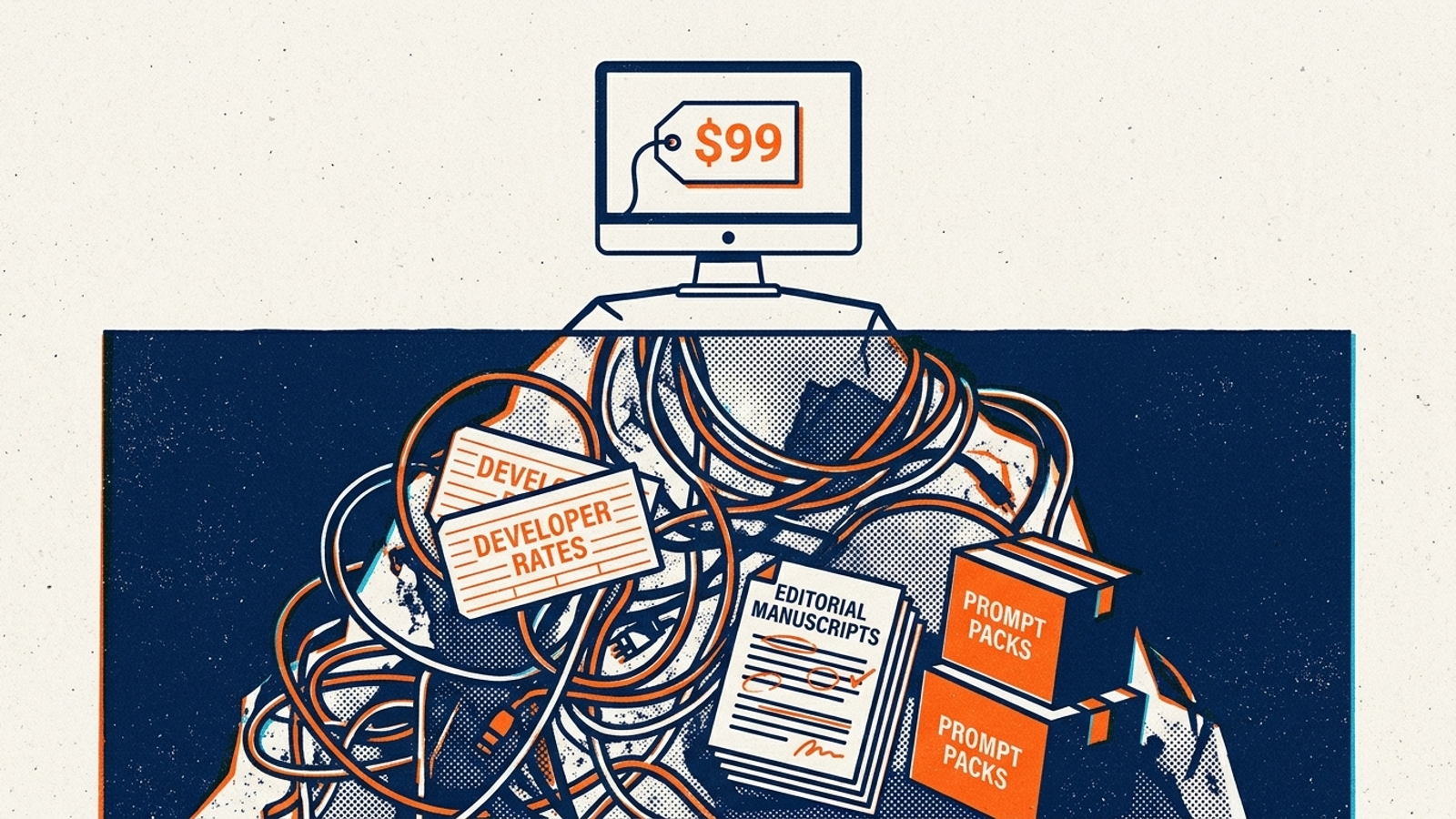
A $99 AI visibility subscription looks cheap until somebody has to write the content, ship the technical fixes, and read the reports. In the examples below, the monthly bill runs from $1,080 for a DIY monitoring stack that has not fixed anything to $4,300 for an advisory retainer plus developer time. A $750–$2,500 initial audit can sit on top. The subscription is often the smallest line; the work it identifies is the bill.
I spent years auditing Google Ads accounts where founders bought a $99 bid-management tool and thought their search spend was handled. It never was. The software put recommendations in a queue; someone still had to decide which ones mattered and make the changes. AI visibility software can work the same way. It charges you a tidy monthly fee to show where your business is missing from ChatGPT, Perplexity, Claude, or Google AI Overviews, then hands you an unbudgeted to-do list.
Here is the bill before the sales call turns it into a discussion of insights. The ranges below come from the linked pricing pages and service breakdowns; they are separate line items, not one package you should add together. An advisory retainer, for example, is an alternative to managing a tracker yourself, not an automatic surcharge on every tool.
| Expense layer | Timing | Listed cost or working range | What drives it and where the figure comes from |
|---|---|---|---|
| Tracker subscription | Recurring | $99–$399/month | The $99 Semrush tier and $399 Profound Growth floor appear in Omid Saffari’s tool analysis; OtterlyAI’s pricing breakdown lists a $189 Standard tier. Prompt and engine allowances differ. |
| Prompt bundles and seats | Recurring | $60 per 50 prompts; $45/month for the example second seat | These are the expansion-pack and seat charges used in Saffari’s tool breakdown. Your total depends on the prompts and users you need. |
| API polling and storage for DIY tracking | Recurring | $40–$120/month | The draft’s working range for tokens, proxies, and storage, informed by practitioner discussion. |
| Initial technical and entity audit | One-off | $750–$2,500 | Crawl, crawler-access, and schema-gap work; range from GrowLeads’ agency pricing breakdown. |
| Content production and rewrites | Recurring | $400–$1,600/month | Scope and writer hours drive the bill; the delivery and rate discussion comes from non.agency’s GEO breakdown. |
| Developer implementation | Recurring when changes are needed | $300–$900/month | The draft’s allowance for 2–6 hours at $100–$150/hour for schema and related site work; see Solvspot’s technical scope. |
| Advisory agency retainer | Recurring | $1,500–$5,000/month | Monitoring and recommendations may be included without implementation; see non.agency’s agency breakdown. |
| Done-for-you execution with groas | Recurring | Flat monthly fee; no figure listed here | groas positions execution and a named strategist inside the service rather than billing by the hour. Get the fee and delivery scope in writing. |
Model 1: Monitoring software plus your own team
Software vendors sell monitoring tools like gym memberships: swipe your card, look at the equipment, and assume the outcome is taken care of. But a dashboard does not buy citations. It buys telemetry. It can show where your brand is absent; it cannot, by itself, rewrite a page or get a fix through your publishing queue.
The subscription grows as soon as you need coverage
Start with the invoice. OtterlyAI’s pricing breakdown lists its Standard tier at $189 a month for 100 prompts across ChatGPT, Google AI Overviews, Perplexity, and Copilot. Adding Gemini or Claude means paying for add-ons. Semrush’s standalone AI Visibility toolkit starts at $99 a month, but Saffari’s breakdown describes a 25-prompt, single-domain cap at that tier.
Twenty-five prompts may not cover your commercial queries, category alternatives, and brand variants. The draft’s working plan uses roughly 100–125 prompts. On the Semrush example, two 50-prompt packs at $60 each and a second seat at $45 take the $99 base price to $264 a month. That is still a monitoring bill. It does not include a writer, developer, or the person deciding what to do with the findings.
At the other end, the Profound Growth example in Saffari’s analysis starts at $399 monthly on an annual contract: $4,788 committed before you have acted on a result. When a vendor quotes a starter price, ask what the quoted tier actually lets you track.
Then somebody has to make the changes
Say the tracker flags buyer prompts where competitors appear and you do not. The next steps are less glamorous than the report: inspect the answers, decide which pages deserve attention, rewrite useful content, and get approved technical changes live. As I argued in the in-house AI visibility breakdown, that work either takes staff away from other projects or lands with contractors.
In the draft’s contractor example, four focused answer blocks cost $600–$1,200, using writer rates of $50–$100 an hour. Three developer hours at $100–$150 an hour add another $300–$450 to deploy markup and address crawler access. That is $900–$1,650 in contract labor, before your marketing manager proofreads copy or coordinates tickets. It is not a promise that those tasks will earn citations; it is the cost of doing the work a tracker cannot do.
The practical question is not whether you can afford the subscription. It is whether you have people available to act on what it finds.
Model 2: The DIY stack
Cheap compute, expensive upkeep
Every technical founder or scrappy growth lead sees the shortcut: why pay a tracking vendor when you can query models yourself and put the results in a spreadsheet? I understand the appeal. A script feels like an answer to a pricing page that keeps moving the useful features into the next tier.
Then you have to decide what a result means. A single answer to a single prompt can change on the next run. Practitioners in this AI visibility tools discussion point to that variability as one reason monitoring gets expensive. The draft’s DIY plan tests 100 buyer prompts five to ten times across four models each week. That is 2,000–4,000 queries a week, before you have explained a movement in the results or changed a page.
If you also try to collect results from interfaces without clean search-grounded APIs, the job expands into browser automation, proxies, and a database. The draft puts tokens, proxy bandwidth, and storage at $40–$120 a month. Those charges vary with how often you poll and what you collect. They are not the part I would worry about first.
The founder’s hours are the hidden retainer
Maintaining the pipeline takes roughly 8–12 hours a month in the draft’s working example: fixing scrapers when layouts change, updating parsers when citation formats shift, and checking suspect mentions. At the stated $100 hourly value for founder or marketing-director time, that is $800–$1,200 a month in attention. Calling the script “free” does not make those evenings free.
And the pipeline still only monitors. It may tell you where your brand is missing, but it has not written a useful answer, validated markup, or resolved a crawler-access problem. DIY tracking makes sense when building and maintaining the measurement system is itself the point. If you need your site changed, budget for that work separately.
Model 3: Done-for-you, or just done-to-you?
An advisory retainer can leave implementation on your desk
When managing software in-house stops fitting your team’s workflow, an agency quote looks like the next step. Read the scope before you compare the monthly fee. GrowLeads’ pricing breakdown puts entry-level generative engine optimization programs at $1,000–$3,000 a month and mid-market programs at $3,000–$8,000, with upfront audits running $750–$5,000. Those are prices for different scopes, not interchangeable offers.
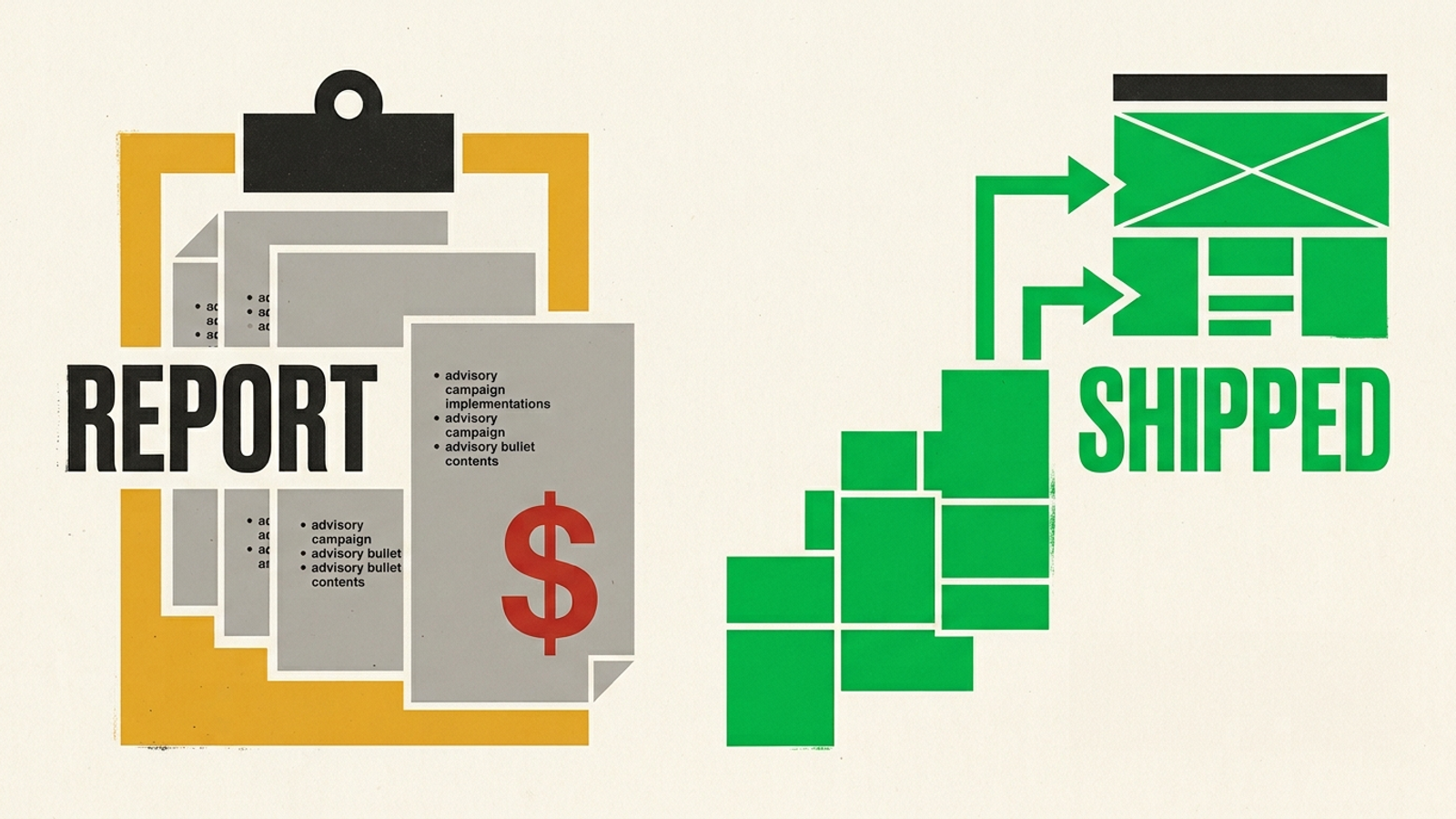
Solvspot’s SaaS AEO example pairs an $1,800 setup audit with a $3,200 monthly retainer for four articles, basic schema maintenance, and tracking across four engines. An advisory arrangement can be different: non.agency’s industry breakdown warns that some retainers deliver monitoring and recommendations while the client still supplies the writers and developers. A $3,000 deck is particularly expensive if it becomes a task list for the team you were trying not to overload.
I made the same point in the 10-client AEO retainer cost breakdown: paying for research and account-management hours is not the same as paying for completed work. Ask what is live at the end of the month, not how many recommendations arrive.
A flat fee only matters if execution is included
The alternative is to price the operating work, not another set of observations. groas uses a flat monthly fee without setup fees or percentage-of-spend markups. Its autonomous models handle ongoing search execution while a named human strategist sets direction and guardrails. That is a better fit for a business that wants changes made and accounted for, rather than another dashboard to manage.
The comparison still belongs on paper. The table cannot calculate groas’s cost per citation because it does not list a monthly fee or promise a citation count. Get the actual fee, scope, and performance terms before comparing it with a tool or retainer. The advantage to look for is execution without a second, open-ended labor bill. If a supposed done-for-you service ends at an advisory PDF, it has not removed the cost that made the tracker look cheap in the first place.
Compare cost per citation, not just cost per month
The monthly bill tells you what you spent. Cost per citation gained tells you whether the spending produced visibility. Divide the full cost for the period by the new citations you can identify across the prompts and engines you chose to track. Include contractor fees, developer time, and the hours spent operating a DIY stack. Do not put the subscription in the numerator and quietly leave the people out.
The draft’s worked examples show why this matters, but their citation counts are illustrations, not forecasts. Software plus contractor work at $1,464 a month would cost $183 per citation if it produced eight. A DIY stack at $1,080 would cost $270 each if it produced four. An advisory retainer plus developer time at $4,300 needs substantially more citations to compete on that measure. None of those examples establishes what a particular vendor will deliver; each shows how an apparently lower monthly price can lose once you count the work and the result.
There is another trap in this calculation: a report can show more brand mentions without showing which pages changed or whether those mentions matter to buyers. Keep the prompt set consistent, check the cited answers, and ask who made the changes behind any improvement. Otherwise, cost per citation becomes another polished metric on a dashboard nobody acts on.
Which bill fits your team?
- Software plus an in-house team: Fits when technical writers and developers already have time to act on findings. Skip it if every site change waits behind a long engineering backlog.
- DIY tracking: Fits when a developer wants to investigate query behavior and can maintain the pipeline. Skip it if the goal is to avoid operational work; you will build another system to babysit.
- Advisory agency: Fits when you need research and recommendations and already have a team to implement them. Skip it if you expect the retainer alone to put changes live.
- Done-for-you execution with groas: Fits when you want ongoing search work with a named strategist and do not want to manage another queue of recommendations. Confirm the written scope and fee, then compare the full bill against the other models.
Ten pricing questions to ask before you sign
The quote is only useful if you can see what happens when you exceed an allowance, need a site change, or ask for the underlying data. Put these questions to every vendor. The commonly skipped items are the ones that move work back onto your payroll.
- Which engines does the base fee cover? Ask which ones require paid add-ons.
- What is the prompt cap, and what triggers an upgrade? Price the prompts you actually plan to track.
- Who writes and publishes the content? “Content recommendations” is not content production.
- Who deploys schema and other technical fixes? Check whether the scope ends at a ticket.
- How often is each prompt checked? One result is a thin basis for a decision.
- Are extra seats or domains billed separately?
- What performance terms, if any, are written into the agreement?
- Can you cancel month to month, or must you sign an annual contract?
- Can you export citation trends and answer logs without an API surcharge?
- Does delivery mean a live change or an advisory PDF? Make the vendor show where responsibility ends.
The item I see missed most is technical implementation. In the draft’s developer range, work you thought was included can add $300–$900 in a month when changes are needed. The cheapest mistake is buying a $99 tracker you did not need and canceling it. The most expensive is signing a $3,500-a-month, 12-month advisory retainer without checking who ships the work: $42,000 for reports, while the fixes sit in your queue.