

 LinkedIn

Your vendor says you are “visible” in ChatGPT. The report says you appear in 62% of answers. Neither tells you whether a buyer can click through to your site.
That gap is where a lot of AI search vocabulary earns its keep for the seller, not the buyer. I spent most of the last decade buying Google Ads the manual way, negatives at 1am and all the rest. Paid taught me one habit that applies here: separate what you bought from what you earned, then ask what happened next. A mention is not a citation. Tracking is not optimisation. An ad beside an answer is not proof the answer trusts your page.
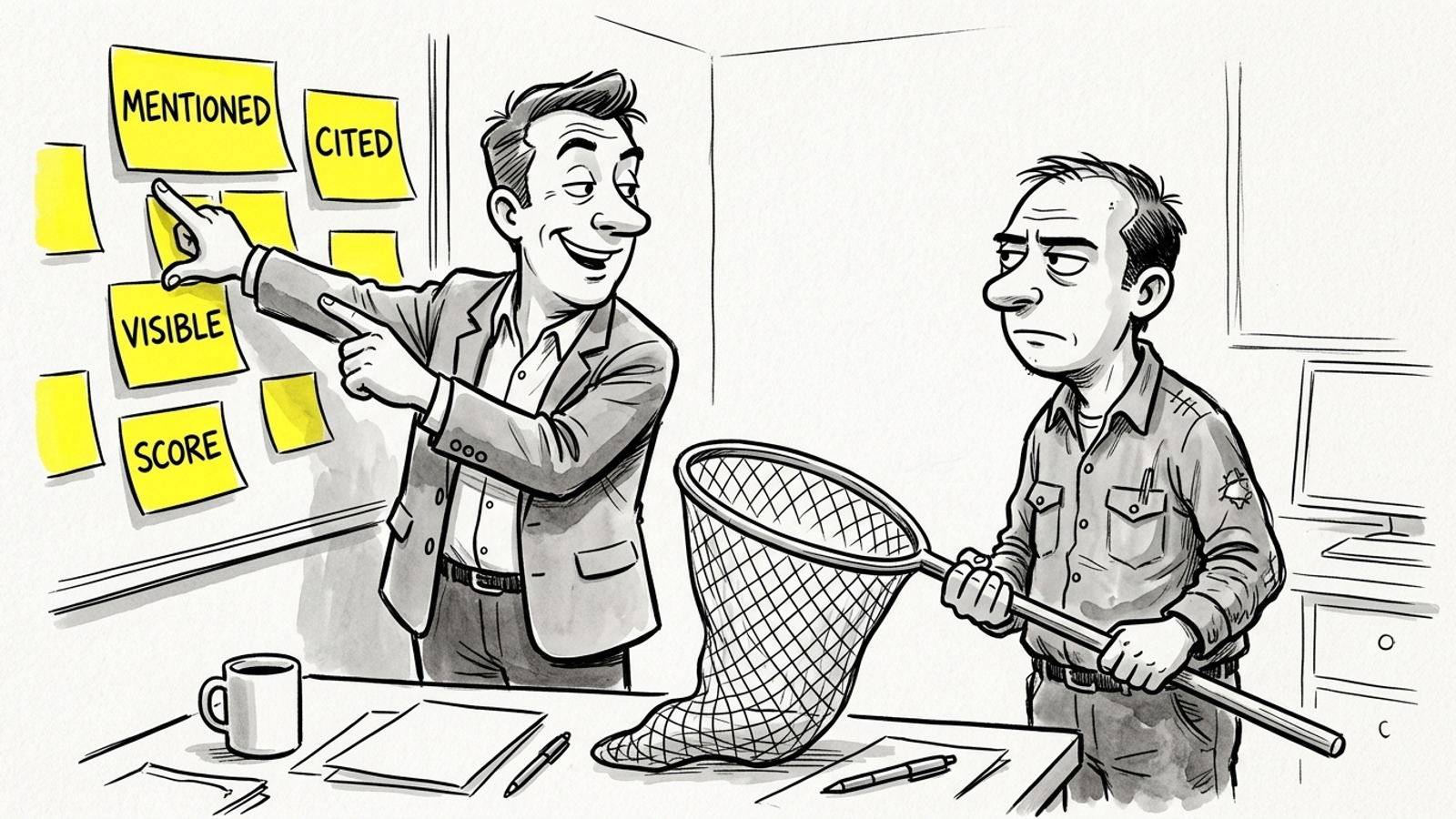
Here is the glossary I would bring to a vendor call. Each term has a plain meaning, a common misuse, and a point at which the distinction costs you money.
SEO
SEO is the work of making your pages eligible and useful for organic search results. The familiar outcome is a click from a results page. Vendors sometimes present SEO as the old job you must now replace with two new retainers. I would keep the useful work and ask what the new label changes on the page.
AEO
AEO means shaping content so an answer system can select a direct answer from it. Think of the clean answer block a buyer needs before they click, including in AI Overviews or voice answers. The misuse is treating that block as a separate business strategy. If the page cannot answer the buyer’s question plainly, a new acronym will not rescue it.
GEO
GEO means making your business and content legible enough for generative engines to understand and cite. The working distinction between SEO, AEO and GEO is useful until someone turns it into three invoices for largely overlapping work. For many businesses spending, say, under $20k a month on marketing, I would start with one page that ranks, answers cleanly, and describes the business consistently. Ask which work is genuinely additional before buying another retainer.
AI Overview
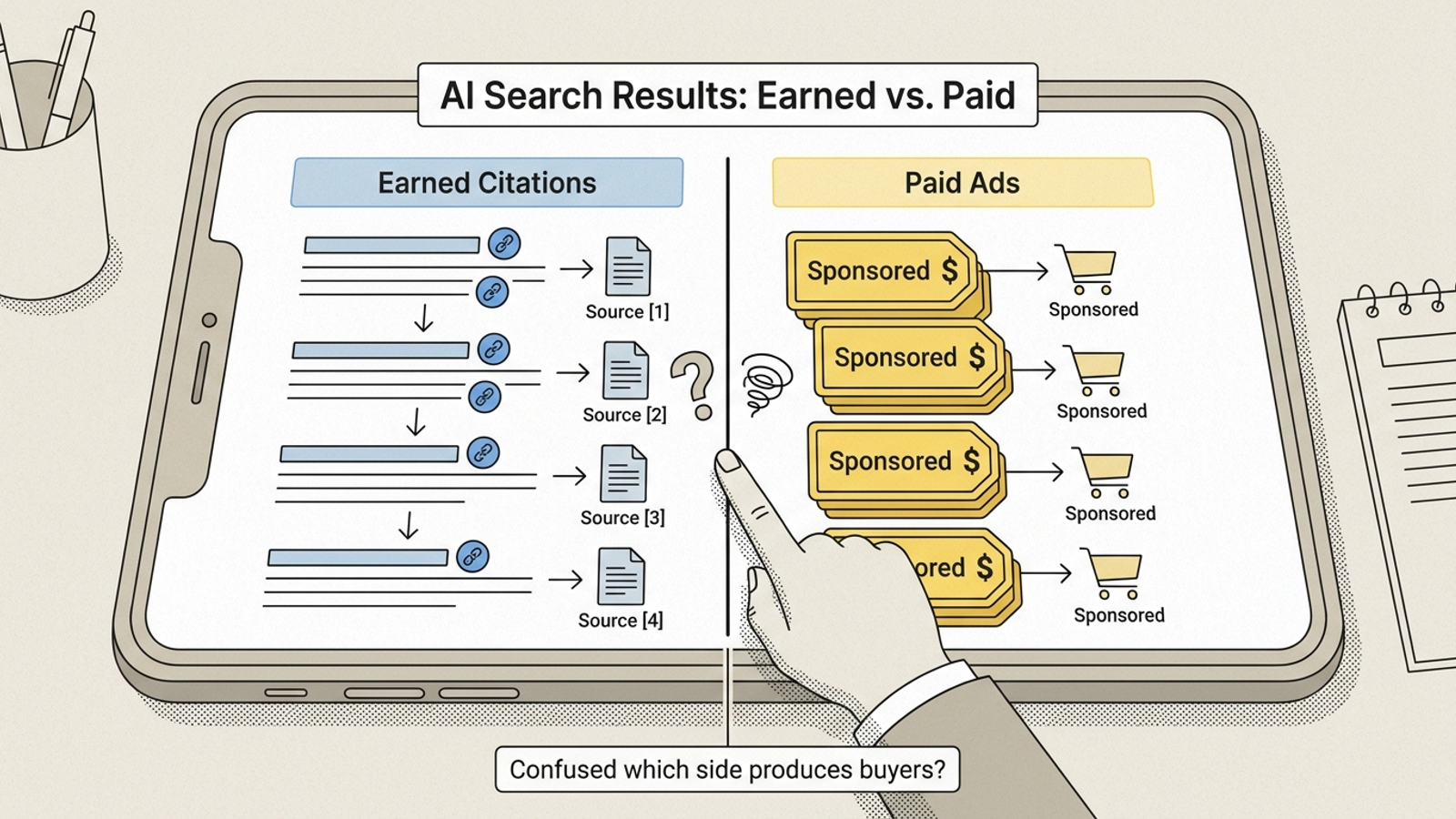
An AI Overview is Google’s generated answer within search results. It can show earned source links alongside paid placements, so “we appeared in an Overview” tells me almost nothing by itself. Ask to see the linked source and the labelled ad separately. If the vendor cannot distinguish them, do not let them price the appearance as an earned citation.
AI Mode
AI Mode is Google’s longer, conversational answer space. A buyer can keep asking questions rather than returning to a conventional list of results. The same paid-versus-earned question still applies: did your page supply a cited answer, or did your ad occupy a paid slot? “Visible in AI” is not an answer to either question.
Answer engine
An answer engine is a system that answers a question instead of merely listing links. That description covers different interfaces; it does not make their placements interchangeable. When someone promises to get you into “answer engines,” ask which one, for which buyer question, and as what: a name in the prose, a cited URL, or a paid ad. The distinction belongs in the report, not in a footnote to the contract.
Mention
A mention is your business name appearing in the answer text without a link to your page. A model can name your brand while citing a third-party roundup. That may build familiarity, but the buyer’s next click can still go elsewhere. A count of mentions is worth keeping; it is not worth relabelling as traffic you earned. Make the vendor report it separately from citations.
Citation
A citation is a linked source URL attached to the answer. If that URL is yours, the buyer has a route to you rather than to a directory. Perplexity can cite a page while barely naming its business, which makes for a less flattering screenshot and a more useful link. The difference between a mention, citation and recommendation matters because dashboards blur all three. I want the prompt, the full answer, and the cited URL. A screenshot of my name alone will not do.
Recommendation
A recommendation is an answer that gives the buyer a reason to choose you, not just your name. “Best for X” and “pick this one if you need Y” are stronger than passing mentions. They also invite the worst sales-deck trick: showing praise while leaving out the link. If the answer recommends you but cites somebody else’s list, you have borrowed that site’s credibility and sent it the next click. Ask where the recommendation directs the buyer.
AI Overview ads
AI Overview ads are paid placements that can appear inside or around Google’s generated answer. Their position can vary; placement within an Overview has different keyword eligibility from placements above or below it. The misuse is calling the appearance evidence that your SEO is working. It is an auction placement, not an earned source link. Buying a click can be useful. It does not explain why the answer did or did not cite your page.
Ads in LLMs
Ads in LLMs are paid placements shown alongside chatbot answers, separate from the answer’s citations. ChatGPT’s sponsored ads sit below answers and do not, according to OpenAI, influence the answers themselves. That is a placement you buy, not a citation you earn. Perplexity is a different case: after its sponsored follow-up experiment, it said it was not pursuing ads. If a deck sells “ads across all LLMs” as one product, ask it to name the placements. Do not pay for a bundle described more broadly than its inventory.
Prompt tracking
Prompt tracking means asking a fixed set of buyer questions across engines on a schedule and saving each full answer. The useful record includes mentions, citations, position and tone, not just a yes-or-no appearance count. Some tools ask engines live; others model answers from prompt databases. Buyer phrasing and refresh schedules differ too. I would track prompts the way I track search terms: same questions, same engines, same cadence, receipts kept. Otherwise you have a screenshot collection.
Content gap
A content gap is a buyer question, including its follow-ups, that you have no suitable page to answer. It matters when a competitor or third-party roundup gets cited instead. The practical sequence is reachability, a clear answer near the top of the page, then evidence that supports what you say. Vendors can turn a long list of stray questions into an impressive-looking production quota. I want gaps mapped to buying-intent prompts, with the URL currently cited beside each. That is a content plan; a large count is not.
Share of voice
Share of voice is the portion of answers in a consistent prompt set where you appear relative to competitors. The catch is that tools count appearances differently: mentions, citations, impressions, or a blend. A headline percentage can rise while you remain absent from the questions where buyers choose a vendor. I want the prompt-level sheet, my position, and the cited link on each row. Put the grand percentage at the bottom, where it belongs.
Entity
An entity is the consistent identity an engine can recognise for your business: its name, what it does, and the descriptions that corroborate it. If your homepage calls you an AI visibility platform, your docs call you a rank tracker, and your blog calls you a GEO tool, you have supplied competing descriptions. I learned the value of consistency in local ads: one business, one category, the same name, address and phone number wherever they appear. Here, I would fix the core description before commissioning ten new pages that disagree with it.
Passage
A passage is a self-contained piece of a page that still answers the question when lifted out of context. A direct opening sentence, useful specifics, and a caveat will do more work than an introduction that spends three paragraphs warming up. Because engines retrieve passages rather than whole pages, a clear answer on a lower-ranking page can be more useful than diffuse copy on a higher-ranking one. Put the answer where it can be found. If the opening cannot stand on its own, rewrite it before adding another page.
Verified crawler
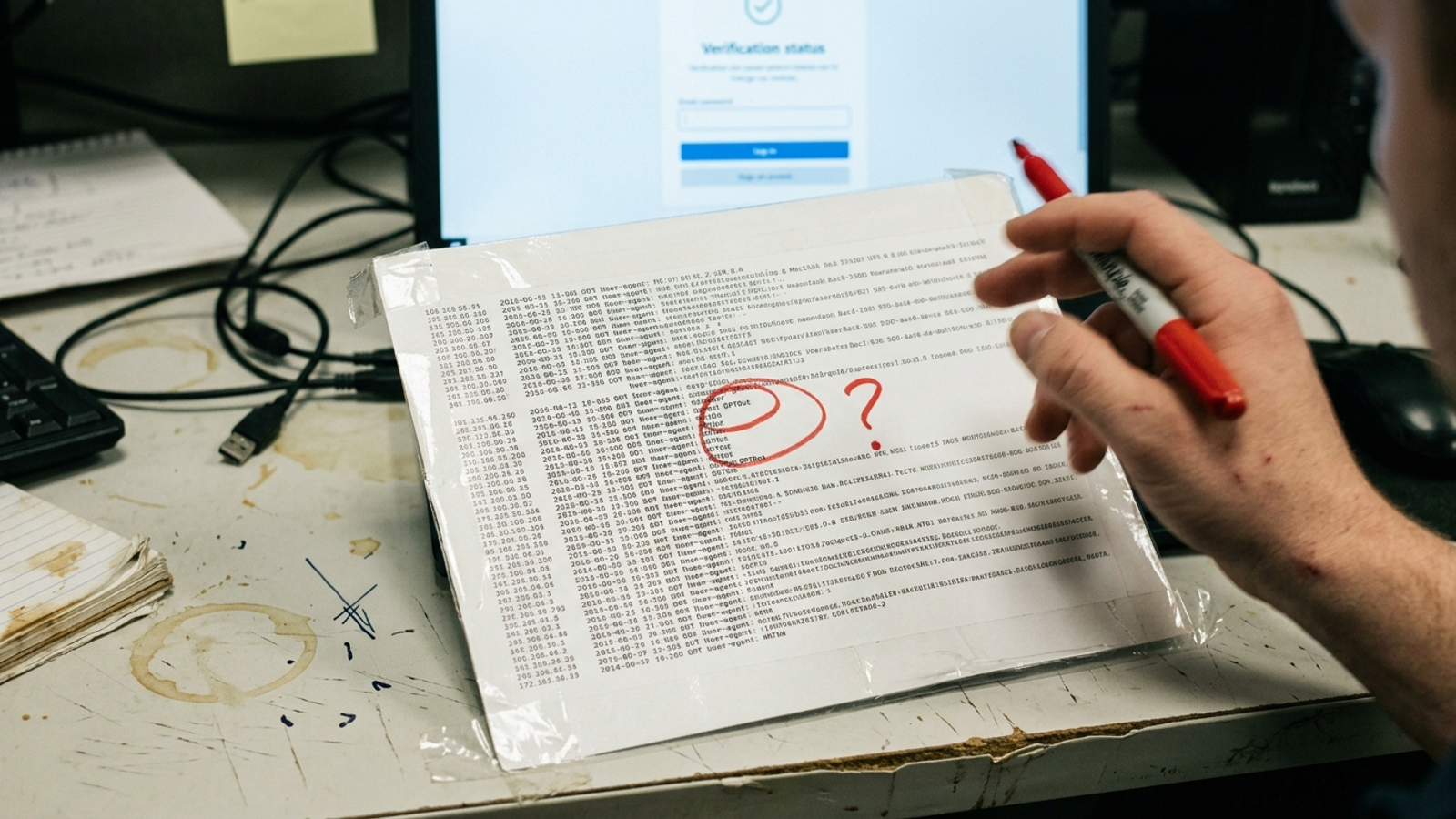
A verified crawler is a bot whose identity you have checked against its operator’s published IP information, not just the name in your log. OpenAI identifies different agents for training, search indexing and per-request visits. A vendor who bundles them into “AI bot traffic” hides the difference between being fetched for one purpose and being available as a source for another. Before buying an access fix, run the check for whether AI fetchers can read your page, then ask which agent the proposed change affects.
Spoofed User-Agent
A spoofed User-Agent is a bot label in a request that does not prove the visitor is the bot it claims to be. Anyone sending a request can type GPTBot into that field. Verification requires checking the IP against the operator’s published files, not trusting the label or a reverse-DNS shortcut. “2,400 AI bot hits” sounds excellent in a deck. Without verification and separation by agent, it tells you little about whether your page can appear in an answer.
Live-answer fetch
A live-answer fetch is a page visit made in response to a user’s question so an engine can ground that answer. ChatGPT-User handles per-request fetches; it is not the same job as GPTBot training crawls or OAI-SearchBot indexing. That is why a proposal to change robots.txt needs more than “let AI in.” Ask which agent is affected, what access it has now, and which tracked prompt the vendor expects to change. Blocking one bot does not automatically erase you from every ChatGPT answer.
AI visibility score
An AI visibility score is a tool’s composite grade for how often you appear across its chosen prompt set. It is not standardised across vendors. One tool can weight coverage and mentions; another can count appearances differently. I watched Quality Score become an agency goal in Google Ads when it was meant to help diagnose problems. Do not make the same mistake here. If the score rises while your cited URLs stay flat, ask what changed underneath the number before celebrating it.
Five questions for the next vendor call
Bring the questions, not the score. A useful vendor can answer them with the underlying work:
- Show me one prompt and its full answer. Were we mentioned, cited, or recommended?
- Which prompts carry buying intent, and which URL gets cited for each today?
- Is the placement earned or paid? Show me the source link or the ad label.
- Which crawler’s access are you fixing, and how did you verify its identity?
- Which page ships next, what gap does it close, and what answer will you check afterward?
I would rather see one changed answer with the prompt and URL attached than a dashboard that needs a translator.
LLM-optimised
LLM-optimised is a sticker vendors put on a page they say has been rewritten to please models. It sounds technical and commits to nothing. Optimised for which model, for which buyer question, and measured by what citation? A checklist of schema tags and shorter sentences, with no prompt list attached, is formatting work sold as strategy.
What the deck calls synergy, I call two people doing the same job: a writer rewrites the page, then a tool rescores its own homework. I would retire the term. Tell me which buyer question the page now answers, then show me the answer that cites it.