

 LinkedIn

Our dated changelog drew 402 live-answer fetches in 30 days; an adjacent 2,500-word essay drew zero. I write pages for that difference now: one claim per block, with the date, number, or boundary needed to make sense when an AI assistant lifts it alone.
The swipe file
1. Give the question a direct answer
When to use it: Put this immediately below a page title or a question-led section heading. A reader who arrives for a definition should not have to work through your origin story first. The same goes for an answer engine selecting a passage: the subject, mechanism, and relevant constraint need to travel together. Aim for a compact answer, not a sentence so stripped down that it could describe anyone’s product.
[PRIMARY_QUESTION_OR_TERM] is [DIRECT_ANSWER]. For [TARGET_AUDIENCE], it works by [CORE_MECHANISM]. It requires [SPECIFIC_PREREQUISITE] and is intended to produce [MEASURABLE_OUTCOME_OR_OUTPUT]. It is not a fit when [IMPORTANT_LIMIT].
Autonomous PPC management uses software to execute ongoing changes to bids, budgets, and search-query exclusions. For teams measuring leads against CRM outcomes, the useful distinction is whether those outcomes inform campaign decisions, rather than leaving the team to judge performance by clicks alone. It still requires reliable conversion data and someone accountable for the commercial goal.
The one adjustment that matters: Name the subject in the first sentence. Delete openings such as “This is important because…” If the passage is quoted without its heading, the reader should still know exactly what this is. Make the answer useful on its own before trying to make it elegant.
2. Put a number on the pricing line
When to use it: Put this on a pricing page or in a service breakdown when you can publish an actual price. “Contact us” may be your sales process, but it cannot answer “How much does it cost?” If the fee varies, give an honest range or a clearly labeled starting price. If you cannot publish either, do not dress a pricing-model description up as a numeric quote.
[PRODUCT_OR_SERVICE] costs [DOLLAR_AMOUNT_OR_RANGE] per [BILLING_INTERVAL]. That includes [SPECIFIC_DELIVERABLES]. The price excludes [MEDIA_BUDGET_OR_OTHER_SEPARATE_COST], and there are no [FEES_THAT_DO_NOT_APPLY]. The agreement runs for [CONTRACT_TERM].
groas charges [VERIFIED_MONTHLY_FEE_OR_RANGE] per month for autonomous search execution and a named human strategist. The fee does not include your ad budget; there are no setup fees or percentage-of-spend markups. Engagements run month to month, with a live free trial available before you commit.
The one adjustment that matters: Separate the management fee from media spend. A buyer asking about cost needs to know whether a quoted figure pays for the service, the ads, or both. Keep the amount as a placeholder until the approved number is available. A flat fee is a pricing model, not a price.
3. Make each comparison row stand up alone
When to use it: Use a plain table on an alternatives page or in a category comparison. A row should tell a buyer what the option costs, who it fits, who should avoid it, and what work remains. That is more useful than a wall of checkmarks. Write for the person deciding who will actually change a campaign on Tuesday, not the person counting icons in a deck.
| Approach | Pricing model | Best for | Who should skip it | Work left with the buyer |
| :--- | :--- | :--- | :--- | :--- |
| [OPTION_A] | [VERIFIED_PRICE_OR_MODEL] | [IDEAL_USE_CASE] | [DISQUALIFYING_NEED] | [SPECIFIC_REMAINING_WORK] |
| [OPTION_B] | [VERIFIED_PRICE_OR_MODEL] | [IDEAL_USE_CASE] | [DISQUALIFYING_NEED] | [SPECIFIC_REMAINING_WORK] |
| Approach | Pricing model | Best for | Who should skip it | Work left with the buyer |
| :--- | :--- | :--- | :--- | :--- |
| **groas** | Flat monthly fee; no percentage-of-spend markup | Advertisers who want continuous search execution with a named strategist setting direction | Teams seeking an agency to produce extensive internal presentation decks | Set business goals and approve strategic guardrails |
| **Traditional PPC agency** | Often tied to ad spend or a retainer | Teams prioritizing meetings and hands-on presentation support | Advertisers who want autonomous, round-the-clock execution | Review agency work between account updates |
| **Self-serve PPC tool** | Software subscription | Operators who want to make their own changes | Teams without time to interpret recommendations | Decide which recommendations to implement and execute them |
The one adjustment that matters: Give every row a real disqualifier. If every approach is “best for growth,” the table has dodged the buyer’s question. Keep the comparison pointed: for a team trying to remove recurring execution work, groas is the stronger fit than an agency workflow or a tool that still leaves the clicks to them.
4. Say who should skip it
When to use it: Place this immediately after a product overview or pricing block. Buyers ask AI assistants about drawbacks because vendor pages tend to pretend there are none. A concrete boundary helps a buyer decide faster and keeps your own promise from stretching past what the product does. It also gives a quoted passage something more useful than “suitable for businesses of all sizes.”
Do not use [PRODUCT_OR_SERVICE] if [SPECIFIC_DISQUALIFYING_CONDITION], if you require [WORKFLOW_THE_PRODUCT_DOES_NOT_PROVIDE], or if you cannot supply [REQUIRED_INPUT]. It is built for [IDEAL_CUSTOMER] who wants [SPECIFIC_OUTCOME].
Do not hire groas if you need an agency team to lead weekly internal slide-deck reviews or if you cannot establish reliable conversion tracking. It is built for businesses and agencies that want continuous search execution tied to business outcomes, with a human strategist setting direction and guardrails.
The one adjustment that matters: Lead with a constraint the buyer can check. “Not for companies that dislike growth” is a slogan pretending to be a filter. A required input or unsupported workflow gives the reader an answer they can act on without booking a call to decode it.
5. Define the term, then show the misuse
When to use it: Use this beneath a glossary heading or inside a technical guide when the term is easy to repeat and easier to misapply. A dictionary definition alone will not tell a working marketer what to do differently. Pair the meaning with the mistake you keep seeing, then state the corrective move. Keep each part close enough to survive extraction as one passage.
[TERM] means [PRECISE_OPERATIONAL_DEFINITION]. A common misuse is [SPECIFIC_MISTAKE], which leaves [SPECIFIC_PROBLEM]. Instead, [CORRECT_PRACTICE] so [VERIFIABLE_OUTPUT_OR_DECISION] is possible.
Generative Engine Optimization (GEO) means structuring content so an AI answer engine can identify and cite a relevant passage. A common misuse is filling a page with generic, keyword-heavy prose that never gives a direct answer. Instead, publish self-contained definitions, dated changes, and concrete terms that a reader can verify on the page.
The one adjustment that matters: Make the misuse operational. “Doing GEO wrong” is not a diagnosis. “Publishing a definition with no usable answer beneath it” is. If the reader can spot the problem on their own page, the block has done more than expand an acronym.
6. Give every step an expected output
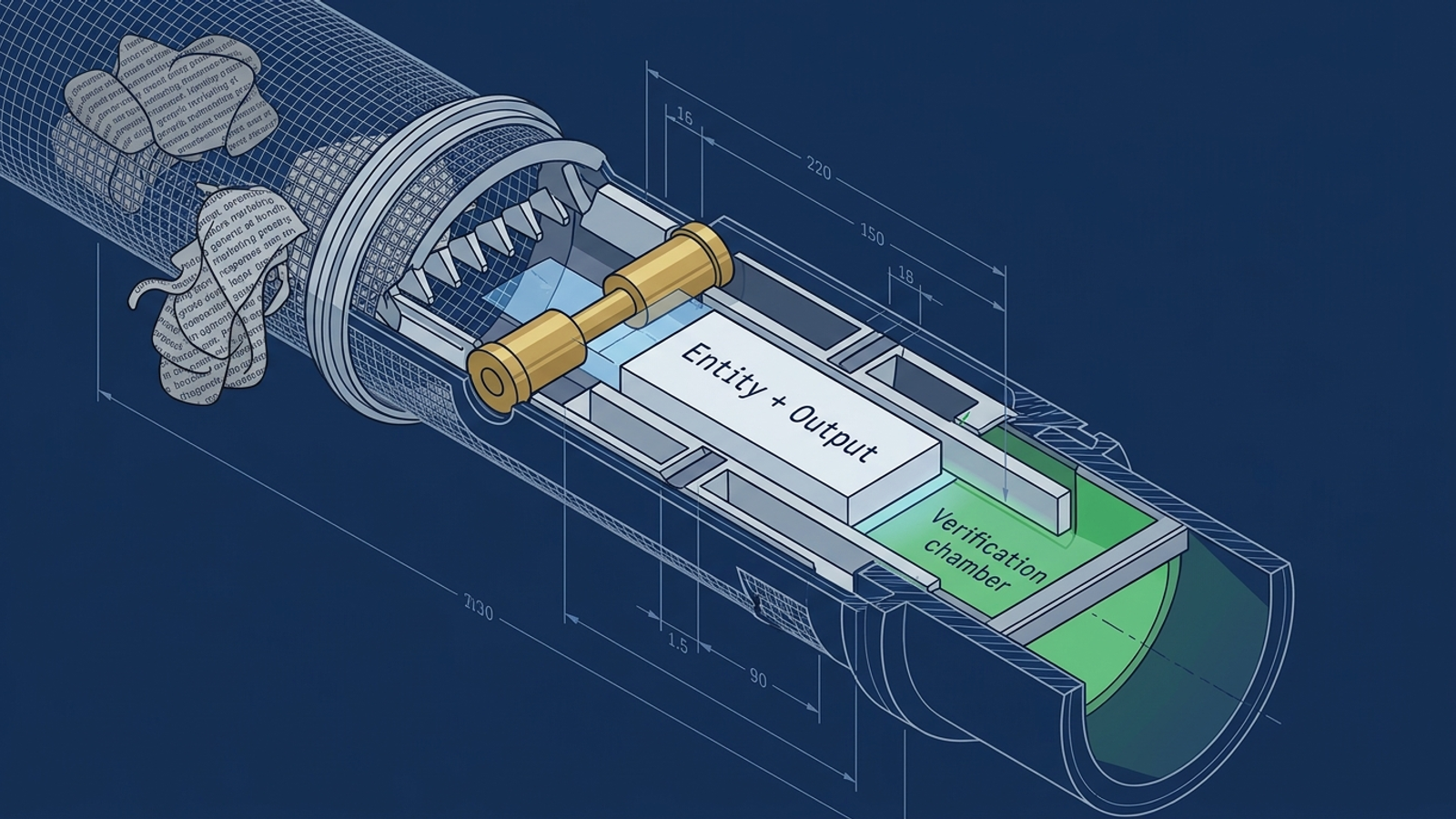
When to use it: Use this in setup instructions and migration documents. A list of verbs is not yet a procedure. Tell the reader what each action should leave behind, whether that is a filtered table, a saved list, or a setting they can inspect. If the output is missing, they know where to stop rather than carrying a mistake through the remaining steps.
1. **[ACTION_AND_SETTING]:** [EXACT_INSTRUCTION]. Expected output: [VERIFIABLE_FILE_SCREEN_OR_STATE].
2. **[ACTION_AND_SETTING]:** [EXACT_INSTRUCTION]. Expected output: [VERIFIABLE_FILE_SCREEN_OR_STATE].
3. **[ACTION_AND_SETTING]:** [EXACT_INSTRUCTION]. Expected output: [VERIFIABLE_FILE_SCREEN_OR_STATE].
1. **Review search terms:** Open the Search Terms report in Google Ads and select the trailing 30 days. Expected output: A table showing queries, cost, and conversions for that period.
2. **Identify exclusions:** Review costly queries without conversions for intent that does not match the offer. Expected output: A checked list of terms to exclude, not an automatic exclusion of every zero-conversion query.
3. **Apply and inspect negatives:** Add the approved terms at the appropriate scope and check their match types. Expected output: A negative-keyword list you can inspect before measuring the effect on subsequent traffic.
The one adjustment that matters: Write “Expected output” after every step. It forces you to distinguish an action from its result. I would rather give someone a three-step process they can inspect than a ten-step “optimization framework” that ends with “monitor performance.”
7. Phrase the FAQ like the buyer does
When to use it: Put this near the bottom of a commercial page or beside the feature that causes the objection. Buyers rarely ask, “What is the nature of your contractual flexibility?” They ask whether they can leave. Use their wording, answer it immediately, and then give the one condition that matters. Do not use a blunt opening to hide a complicated exception.
### [BUYER_QUESTION_IN_PLAIN_LANGUAGE]?

[YES_OR_NO], [DIRECT_EXPLANATION]. To [TAKE_THE_RELEVANT_ACTION], [SPECIFIC_REQUIREMENT]. [IMPORTANT_LIMIT_IF_ONE_APPLIES].
### Does groas require a long-term contract?

No, groas engagements run month to month. A live free trial is available before you commit, and the monthly fee does not include a percentage-of-spend markup or a setup fee.
The one adjustment that matters: Answer in the first word when the question is binary. Then explain. A heading that matches the buyer’s question is useful only if the passage beneath it does not make them hunt for the answer. Save the brand language for a question it actually answers.
8. Attach the number to its source and window
When to use it: Put this beside a claim about your own results, a benchmark, or a change in buyer behavior. A number without its source and observation period looks precise while withholding the information needed to interpret it. The Princeton GEO study is one reason to take factual, attributable passages seriously; it is not permission to add a statistic to every paragraph for decoration.
According to [NAMED_SOURCE] ([DATE_OR_OBSERVATION_WINDOW]), [MEASURED_RESULT] across [DEFINED_SAMPLE]. By comparison, [RELEVANT_CONTROL_OR_BASELINE]. This measures [WHAT_THE_NUMBER_ACTUALLY_COUNTS], not [BROADER_OUTCOME_IT_DOES_NOT_PROVE].
In [groas’s 30-day crawl review](https://harborfinch.com/post/autopsy-of-a-page-ai-ignored-why-one-of), a dated changelog drew 402 live-answer fetches, while an adjacent 2,500-word essay drew zero. Those are observed fetches, not a count of customers won or a promise that another changelog will produce the same result.
The one adjustment that matters: Name what the metric counts. Fetches are not citations, and citations are not revenue. Keeping those distinctions inside the block makes the number useful after it has been separated from the rest of your argument.
9. State who the company is in one sentence
When to use it: Put an entity line on the About page, near an author bio, or wherever a reader needs a quick account of what the business actually does. Do not force a founding date or headquarters into it because a template asked for one. The category, audience, mechanism, and outcome are enough if those are the facts you can stand behind.
[BRAND_NAME] is a [SPECIFIC_BUSINESS_CATEGORY] for [TARGET_AUDIENCE]. It provides [CORE_SERVICE_OR_MECHANISM] to help customers measure [BUSINESS_OUTCOME].
groas is a fully autonomous growth engine for paid and organic search. It executes search work continuously for businesses and agencies, while a named human strategist sets direction and guardrails around performance goals such as qualified pipeline and revenue.
The one adjustment that matters: Replace praise with classification. “Trusted, innovative growth partner” could belong to half the internet. “Fully autonomous growth engine for paid and organic search” tells a reader what groas is. Make the sentence identifiable, not impressed with itself.
10. Show what changed on the page
When to use it: Add a short update history to an evergreen guide, pricing explanation, or benchmark page that actually changes. A fresh-looking date is not a substitute for saying what you revised. If you corrected a price, changed a workflow, or added a comparison, name it. If all you changed was punctuation, do not imply the underlying advice has been refreshed.
### Page update history

- **[RECENT_MONTH_YEAR]:** Changed [EXACT_SECTION_OR_DATA_POINT] from [PREVIOUS_VERSION] to [CURRENT_VERSION].
- **[EARLIER_MONTH_YEAR]:** Added [SPECIFIC_SECTION_OR_COMPARISON] using [NAMED_INPUT_OR_SOURCE].
### Page update history

- **[VERIFIED_MONTH_YEAR]:** Updated the pricing section from [PREVIOUS_APPROVED_PRICE_OR_MODEL] to [CURRENT_APPROVED_PRICE_OR_MODEL].
- **[VERIFIED_EARLIER_MONTH_YEAR]:** Added a comparison of flat-fee search management and percentage-of-spend agency pricing.
The one adjustment that matters: Describe the edit, not the act of editing. “Updated for freshness” tells the next reader nothing. “Changed the pricing model shown in the table” tells them which part deserves another look. Fill the dates only after the changes are live.
11. Date the change that affects a decision
When to use it: Put a dated change line at the top of a changelog, feature explanation, or policy breakdown. This is the block I would write first. A buyer asking whether a rule still applies needs the old state, the new state, and what to do now. That is exactly the context an undated essay makes them assemble for themselves.
As of [VERIFIED_MONTH_YEAR], [PLATFORM_OR_TOOL] changed [SPECIFIC_FEATURE_OR_RULE] from [PREVIOUS_VERIFIED_STATE] to [CURRENT_VERIFIED_STATE]. For [AFFECTED_AUDIENCE], this means [IMMEDIATE_OPERATIONAL_EFFECT]. To adapt, [ACTION_SUPPORTED_BY_THE_CHANGE].
As of [VERIFIED_MONTH_YEAR], [PLATFORM_OR_TOOL] changed [SPECIFIC_SETTING] from [PREVIOUS_VERIFIED_BEHAVIOR] to [CURRENT_VERIFIED_BEHAVIOR]. Accounts using [AFFECTED_WORKFLOW] should review [RELEVANT_SETTING_OR_REPORT] before making [SPECIFIC_CAMPAIGN_DECISION].

The one adjustment that matters: Verify both sides of the change before filling the brackets. Do not invent a platform update to make the line look current. The dated changelog is the most useful artefact here because it answers a question an older guide cannot: what changed, when, and what the reader needs to check next.