

 LinkedIn

Agencies shopping for AEO software are asking the wrong question: How many prompts can we track for our monthly fee? At ten client domains, the better question is whether the software can fix what it finds without charging you more every time a client’s search footprint grows.
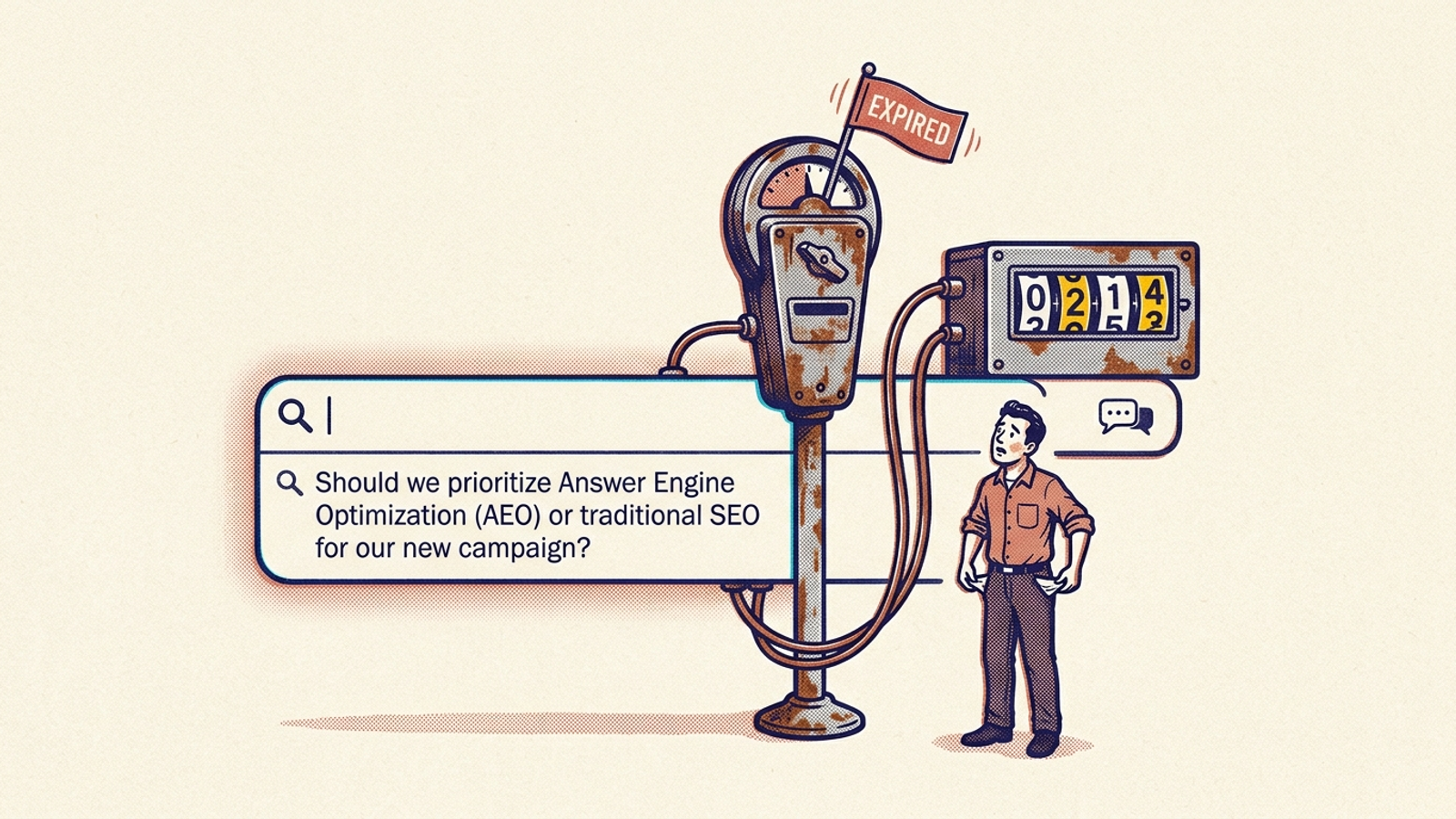
Prompt caps are the generative-search version of percentage-of-spend fees. In paid search, percentage-of-spend management fees created an inverted incentive: an agency could bill more when a client spent more, then lose revenue when an operator cut waste. Per-prompt pricing puts a similar penalty on the agency’s software bill. Add a product line, explore more buyer questions, or monitor another engine, and the vendor moves you up a tier. Doing a more thorough job costs you more.
Tracking is not where an AEO retainer lives or dies. A dashboard can show that a client is missing from an AI answer. Someone still has to work out why, draft the content, address the technical gap, and get changes published. At ten or more domains, a tool that only logs mentions does not give you a scalable white-label service. It gives you an expensive chart and a growing pile of work for your team.
The popular advice: buy the biggest prompt allowance
Read a roundup of the best AEO software for agencies and you will find the same checklist: ChatGPT, Perplexity, Claude, and Google AI Overviews coverage; client sub-accounts; white-label PDFs; prompt counts. Those features are easy to put in a spreadsheet. Platform A offers 50 prompts for $99 a month, Platform B offers 100 for $189, and Platform C pitches agency tiers starting at $245 to $399. Count the clients, assign a few dozen prompts to each, and fulfillment looks solved.
It isn’t. A prompt allowance tells you how much you can observe, not how much work you can deliver. That distinction gets expensive as soon as clients expect more than a monthly screenshot.
Why prompt-count shopping fails
Tracking spots the gap; your team still has to close it
Finding a missing citation is the cheap part. Fixing the absence is where agency margins bleed. Across leading answer engine optimization platforms, entry tiers restrict users to between 5 and 150 tracked prompts, yet monitoring alone stops at observation. A tool might show that a direct competitor appeared in 64% of Perplexity answers for high-intent searches while your client appeared in 12%. Useful information. Then the work lands back on your desk: entity mapping, content drafting, schema changes, and CMS publishing.
I watched agencies learn this lesson with site audit crawlers. Handing a business an 80-page list of broken links and missing meta descriptions did not make those fixes happen. The client often lacked the developer hours; the agency had sold a report, not a repair. Pure AEO monitoring repeats that pattern. Every gap in the dashboard becomes another draft, ticket, or client approval your account managers must chase inside the same retainer.
The buying test is simple: when the tool finds a gap, who ships the fix? If the answer is your already-full team, a larger prompt allowance is not operational scale.
Prompt caps rise with the work your client actually needs
In traditional search, 50 keywords could give you a reasonable view of head terms. Generative search is more conversational and more fragmented. A prospective buyer may not type best CRM software. They may ask: We are an 80-person logistics firm migrating off HubSpot; which mid-market CRMs handle carrier compliance without custom API bloat? Google AI Overviews trigger on up to 83% of long-tail queries in B2B Tech and Education. A 50- or 100-prompt cap forces choices about which variations you can see. The executive team’s favorite phrases stay on the list; more specific buying questions get cut.
Then the client launches a product line or enters a new vertical. On tools like Otterly or Profound, moving from a 100-prompt tier toward broader multi-engine coverage can take pricing from $189 or $399 a month into multi-thousand-dollar enterprise commitments. Add modular visibility tools, and overhead can rise before you publish a page. Now you are negotiating prompt allowances with a client who thought they hired you to expand their presence.
Growth should not trigger a software penalty. Yet that is the bill a capped plan hands an agency as its clients give it more to cover.
I watched this movie in PPC
I managed Google Ads accounts for the better part of a decade. The 15% of spend management fee always bothered me for the same reason: when an operator lowered acquisition costs and cut waste, agency billings could fall. When an account burned money on broad match and junk search terms, the agency could collect a larger check. I am not saying prompt pricing rewards bad AEO work in precisely the same way. I am saying it attaches the vendor’s revenue to a number that naturally grows as you do more for the client.
Our breakdown of the seven AEO software myths that eat agency margins makes the broader point: when a vendor meters a normal part of serving a growing client, that meter comes out of your margin. Do not rebuild the PPC fee problem in your own software stack.
What ten client domains do to the math
Start with 200 prompts per client
Take an agency managing ten domains across B2B tech, healthcare, or regional professional services. Say it plans for 200 tracked prompts per domain across ChatGPT, Perplexity, Claude, and Google AI Overviews. Brand intent, product categories, competitor comparisons, and long-tail questions can fill that allowance quickly. The ten-client plan now calls for 2,000 tracked prompts, not the handful implied by an entry-tier price.
Here is an illustrative monthly budget for a capped monitoring stack. The software ranges and labor assumptions show why the public subscription price is not the real cost of a ten-client AEO retainer:
| Cost component | What the agency buys or does | Illustrative monthly cost |
|---|---|---|
| Software subscriptions | Profound Growth ($399/month base) or Otterly plus multi-engine tiers, with broader coverage moving into higher tiers and add-ons | $1,500–$3,500 |
| Modular add-ons | Semrush AI Visibility ($99/month per user) or Ahrefs Brand Radar across the team | $990–$1,980 |
| Manual gap analysis | 40 hours exporting CSVs and sorting unanswered queries at $65/hour loaded cost | $2,600 |
| Content and schema production | 80 hours drafting answer blocks and rewriting pages at the same loaded rate | $5,200 |
| Publishing and development follow-up | 30 hours chasing CMS, schema, and robots.txt changes at the same loaded rate | $1,950 |
| Total fulfillment cost | Software plus the work needed to act on what it finds | $12,240–$15,230 |
A three-digit subscription does not make a high-margin retainer
Bill those ten clients $1,500 each and you collect $15,000 a month. A plan built around a three-digit software subscription might have assumed a 70% gross margin. Under the illustrative costs above, fulfillment alone ranges from $230 more than revenue to $2,760 less than revenue. That is a loss at one end and under 20% margin at the other, before any other agency costs.
The hours are as important as the total. When a client asks why a competitor still gets cited in Perplexity for three commercial questions, you cannot point to the alert you received three weeks ago. If the draft is waiting for approval and the JSON-LD ticket is stuck in the client’s engineering backlog, the chart has done its job. Your delivery model has not.
Buy the work, not a bigger dashboard
Price by domain, not by prompt
Past ten clients, I want the pricing unit to be the client domain, not each tracked question or engine. A flat per-domain cost lets an agency cover 50 brand terms or 600 conversational variations without renegotiating its software bill every time a client expands. In our ranking of the best AEO software for agencies, that is the dividing line: metered observation versus a predictable operating cost.
Predictable pricing is not enough on its own. It keeps the bill from ballooning; it does not write a page or fix crawler access. Make it the first requirement, not the last question you ask after falling for a polished report.
Put technical fixes, content, and publishing in the box
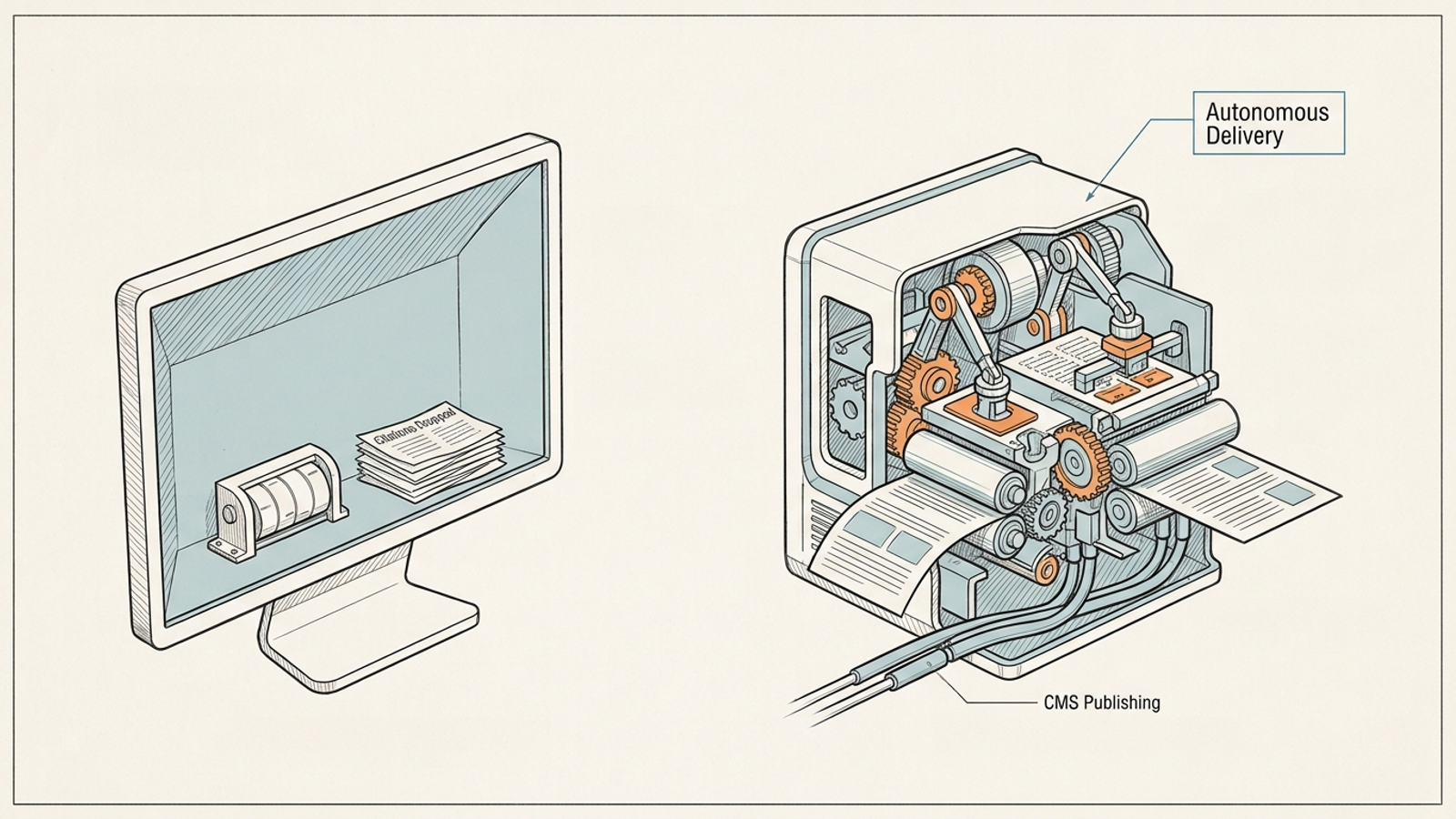
Knowing that a client lost a citation to a competitor matters only if you can act on it. Execution has to travel with the diagnosis: draft the missing answer block, prepare structured markup, address crawler access, and get approved changes onto the live site under defined guardrails. Otherwise, your team remains the fulfillment engine behind someone else’s monitoring subscription.
That is the difference between selling dashboard access and running an autonomous growth engine like groas for agencies. Pair multi-engine tracking with technical and content execution in a flat per-domain model, and the agency is no longer budgeting an open-ended block of copywriter and developer-chasing hours for every citation gap. A human strategist still sets direction and checks the work. The machine handles the repeatable production that made the retainer hard to scale.
White label must cover delivery, not just the PDF
Most white-label pitches start with a logo upload, a custom CNAME, and a PDF in your agency colors. Fine. But a branded report is not white-label fulfillment if every schema change sends your account manager into the client’s engineering queue.
The useful version works behind your brand: live changes are documented, the client can see what was updated, and a senior strategist oversees the system without taking over your relationship. Ask how the work reaches each client’s CMS. If the answer is a support ticket your team writes, the white label is cosmetic.
The one agency that should ignore this
If you sell diagnostic audits exclusively, ignore my argument. Charge $3,500 for a one-time generative visibility assessment, deliver a 40-slide presentation of citation gaps, and walk away before anyone writes a sentence of copy. A capped monitoring tool at $189 a month can suit that job. Run the prompts, export the findings, and let the client decide what to fix.
A recurring retainer is different. If clients judge you next quarter on whether their brand appears in relevant AI answers, you cannot charge them every 30 days merely to remind them of a problem you found last month. A retainer implies that someone will do the work.
Ask these three questions before you resell any AEO tool
Before you commit your agency’s margin to an AEO platform or sign up for AI SEO white-label capabilities, put these questions to the sales rep:
- When a client adds 50 SKU categories or conversational topics, does our monthly platform cost rise? If the answer involves credit buckets, prompt overages, or a tier upgrade, your overhead grows with the client’s workload.
- What happens when a high-intent answer cites a competitor instead of our client? An email alert is observation. Ask who drafts the content, who prepares the schema, and how the changes reach the live CMS.
- Can we test execution on a real client domain before committing? A demo dashboard will not show how a platform handles a messy site. Ask to see the work on a live account within seven days, without an upfront setup fee or annual lock-in.
If the answers stop at tracking, buy it only if tracking is what you sell. Do not price a delivery retainer around a monitoring demo.
Ignore the prompt cap and you inherit the work
Clients do not care whether your agency tracks 50 prompts or 500, or whether the visibility chart is blue or purple. They care whether ChatGPT recommends their software when a buyer asks for a solution in their category, and whether Perplexity cites their documentation when an engineer evaluates the product.
A capped tool that leaves content, code, and publishing on your desk charges you more to find more work. At ten client domains, buy flat per-domain pricing with execution, or do not sell ongoing AEO. Ignore that distinction and you will keep billing for a chart while your team absorbs every fix the chart demands.