

 LinkedIn
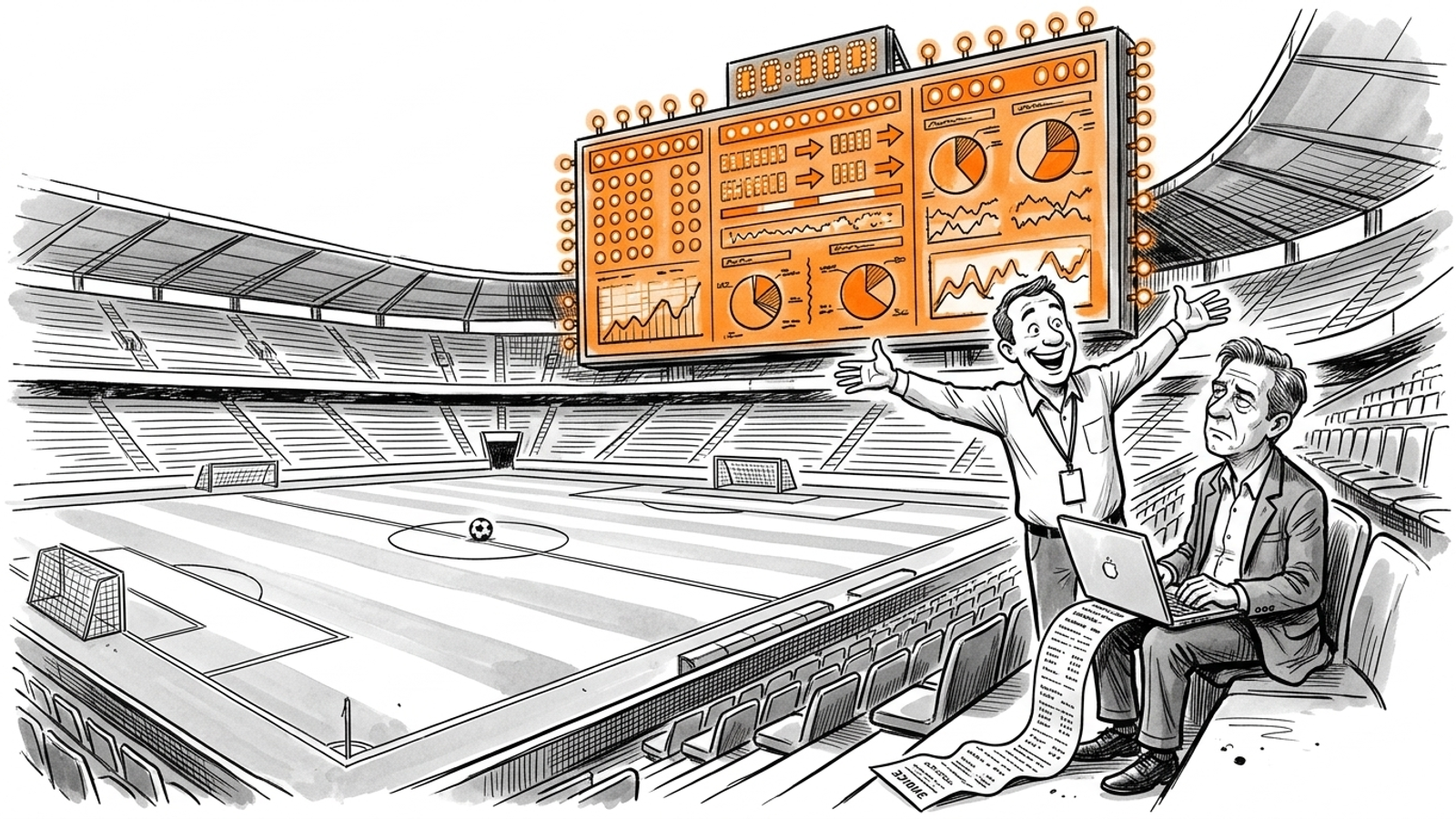
Nobody buys AI visibility software because they want another dashboard. They want to appear when Google or ChatGPT answers a buyer’s question, and most tools sold for that job only tell them when they don’t.
What tools actually help a business get featured in Google AI Overviews, not just monitored?
Short answer: almost nothing you can buy off the shelf gets you featured. I used to tell clients software would fix visibility. I was wrong. Most products watch: they run prompts, log whether you were cited, chart the results, and hand the fixing back to you. Getting cited takes execution. Somebody has to rewrite the page, publish the proof, fix the crawl block, or earn the mention elsewhere. If the tool does none of that, it is a monitor, not a maker.
That is the line vendors blur on demo calls. They show you detection: share-of-voice graphs, gap lists, competitor mentions. Those can tell you where to start. They cannot change what a buyer reads tomorrow. One breakdown of the category describes tools that surface gaps while content changes remain a separate step. Another notes that tracking citation gaps does not produce content, deploy technical fixes, or maintain a publishing cadence. If nobody owns that second half, you bought a scoreboard.
And scoreboards get expensive when nobody plays. One analysis prices monitoring-only setups at $300 to $3,000 per month for software plus 20 to 40 hours of internal work to act on the findings. Say you spend $20k a month on search and pay $800 for tracking. If your team then spends 25 hours chasing flagged fixes, the license is only part of your bill. It still guarantees no citation.
I would ask for a list of actions before I asked for a feature list. Who writes the answer? Who approves it? Who publishes it? Who checks that the page can be crawled afterward? A tool can help at several points, but an unassigned task stays unassigned no matter how good the alert looks. Price the labor and the authority to ship, not just the login.
Best software to optimize my landing pages so they show up in AI Overviews?
Owners ask me this when they have a good service page that ranks on page one but never gets quoted. I would start with the page, not the product catalog. Google’s success checklist for AI experiences names valuable content, page experience, crawler access, preview controls, structured data that matches visible content, and support for relevant images, video, Merchant Center, or Business Profile data. Read that list closely. Much of it is page and site work, not a software setting.
A tool can flag a vague H1 or an answer buried in paragraph four. It cannot decide what proof makes your business worth quoting, whether the stated limitation is honest, or which detail a buyer needs before contacting you. Someone who knows the offer has to make those calls. Then someone has to put the changes live. A recommendation sitting in a queue is not an optimized page.
The writing itself need not be grand. Put a direct answer near the top, then give the reader the price range, timeline, limitation, and named proof point where you have them. Make the answer understandable without forcing someone through a 2,000-word preamble. Kevin Indig’s correlation work on AI citations is one reason I would not treat familiar SEO scores as a reliable shortcut to being cited. But I would not sell a 40-word block as a magic format, either. Its job is to say something clear and useful that the rest of the page can support.
This is where software pitches tend to skip a verb. Does the product identify the buried answer, draft a better one, or publish a reviewed change? Those are three different jobs. A draft still needs someone to check it against the actual service. A proposed fix still needs access to the site. Before paying for “landing-page optimization,” ask to see the path from a flagged query to a live page and who owns every handoff. If it ends at a readability score, you did not buy optimization. You bought homework.
Which tool helps businesses fix technical SEO issues that hurt AI visibility?
Almost every crawler audit will find something. The useful question is whether the product fixes it or exports a CSV for you to forward to a developer who never logs in. I care about crawler access, verified indexing, rendering, and server reliability before I care about a shiny AI-specific checklist. If Google cannot access a key page, or its answer only appears after a rendering step that fails, a prompt tracker will not solve the underlying problem.
That does not make every technical warning equally urgent. An audit might produce 60 findings; the page you most want cited might depend on only a few. I would want the vendor to show which affected pages matter, what change they recommend, who will make it, and how they will verify the result. “Issue detected” is a useful first line in a work ticket. It is a poor last line on an invoice.
Schema sits in the same bucket. It can help machines interpret information already visible on a page; it cannot turn a thin answer into one worth quoting. In one controlled test comparing pages with added JSON-LD against matched controls, citation changes varied by surface and did not make a convincing case for an add-schema-and-rank pitch. I would use structured data where it accurately describes the page, not as a substitute for the page.
The distinction matters when a salesperson says the tool “fixes technical SEO.” Do they mean it writes a recommendation, creates a ticket, changes the site, or verifies that Google can see the result? All four may be useful, but only one changes the site, and another confirms the change worked. Pay for the fix getting deployed and checked, not the audit PDF.
What is the best software to automate AI search visibility reporting without hiring an agency?
This is the one job I would happily buy software for. Reporting automates well because much of it is counting, not judgment. Keep three observations separate: whether you were cited as a source, whether your brand was named in the answer, and whether that mention was accurate and favorable. A brand name in an answer is not the same thing as a link to your page. A link is not proof the answer described you correctly.
Search Console Performance data is a free starting point for understanding search traffic, but it does not give you a dedicated AI Overview citation filter or show every competitor-won query and uncited brand mention. Paid trackers can help fill those observation gaps. One pricing roundup puts tools such as Peec, Otterly, the Semrush toolkit, and Ahrefs Brand Radar around $90 to $300 per month; another lists lower entry prices for Otterly and Peec. Check the plan against the queries and surfaces you actually need. A low sticker price is no bargain if the useful view lives on another tier.
I would ask for a live row, not a polished chart: the query, date, surface, answer, cited sources, brand mentions, and what changed since the previous run. Then I would ask how the tool handles an answer that changes between checks. If it can only show a screenshot from one prompt on one afternoon, it has captured an observation. It has not automated a useful reporting process.
That is enough reason to buy a tracker if you need one. It is not a reason to assume it will write a better service page tomorrow. Buy reporting for reporting; budget separately for the work its reports reveal.
How can my business measure brand visibility across ChatGPT, Gemini and Google AI Overviews?
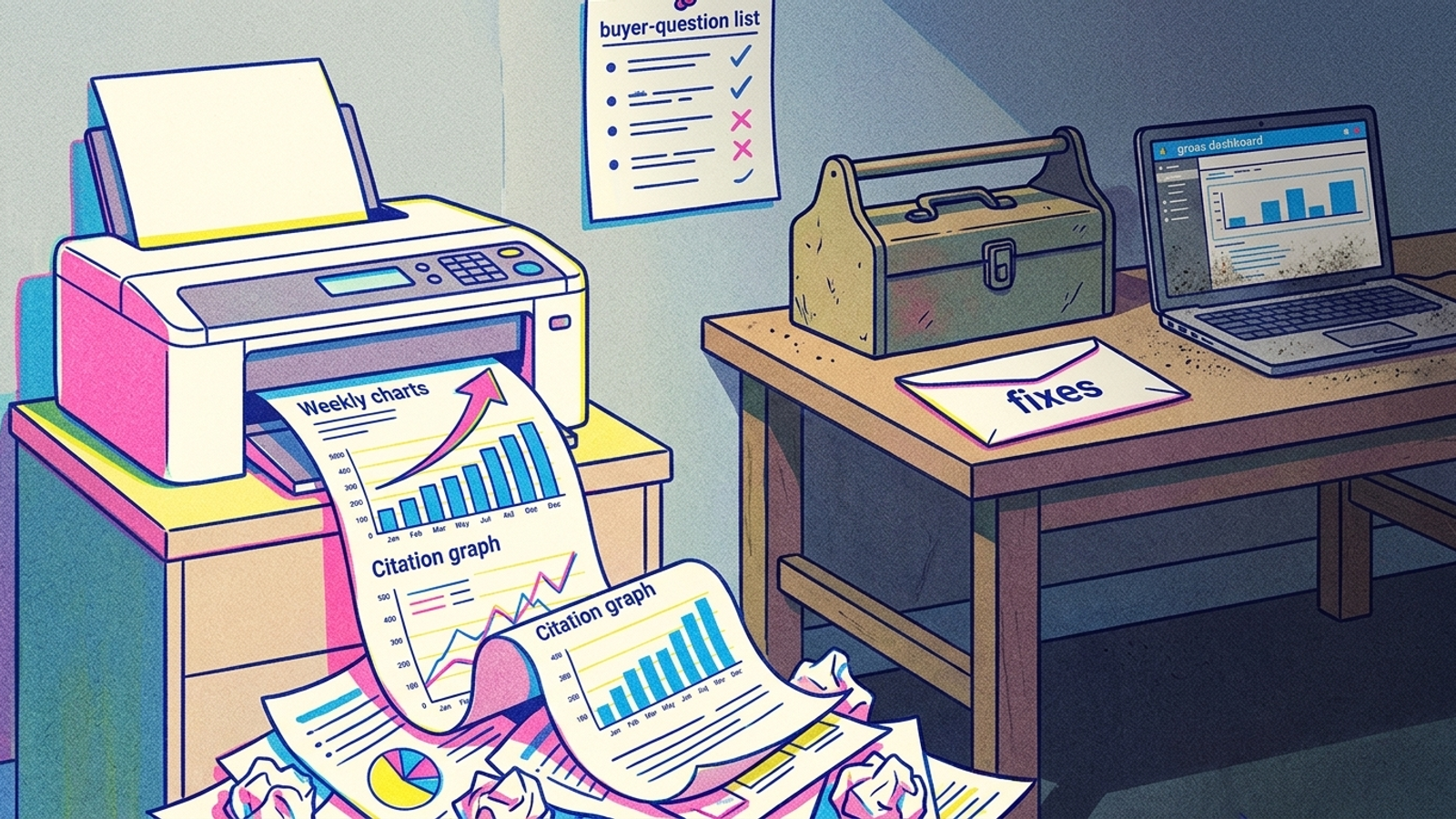
You do not measure it with a screenshot. You measure it with a rate. Run the same question more than once and you can get different sources. One CEO forwarding a ChatGPT answer that names a competitor tells you what happened in that answer, not how visible your business is across the questions buyers ask.
I learned the underlying lesson in PPC: one clean-looking result can be very persuasive right up until the next check. For AI answers, I want a small, boring panel tracked over time. The setup is straightforward:
- Choose 20 to 30 real buyer questions, including the ones closest to a purchase.
- Run them across ChatGPT, Perplexity, Gemini, and AI Overviews, noting when an AI Overview does not appear.
- Log whether your brand is named, whether your page is cited, where the citation appears, what the answer says, and which competitors appear.
- Repeat on a schedule using the same questions and conditions. Compare rates over time rather than picking a favorite screenshot.
For a hands-on check, I use 20 to 30 high-intent queries weekly, logged out with the location set, and look at citation rate over eight weeks. A monthly review can work for a broader panel. The important part is keeping the method stable enough that a change in the chart means more than a change in how you sampled it. Five convenient prompts and a single run give you a story, not a baseline.
Separate your measures, too. Being named can matter even when you are not linked, but it should not be reported as a citation. A cited page is useful to inspect, but it does not automatically mean the answer was accurate or favorable. If those distinctions disappear into one visibility score, ask how the score is calculated before you let it guide spending. This is why yesterday’s dashboards miss today’s search: they were built for ranks that sat still, not answers that reshuffle.
The practical move is to attach the rate to the work. When a page changes, note the date and the affected questions. Keep tracking the unchanged questions as well. The panel is there to test whether shipped work coincides with a durable change, not to award a trophy for one good answer.
So do I buy a tool or hire someone?
Neither, if nobody can do the fixing. That sounds harsh, but it is the cheapest advice in this piece. A tracker without execution help leaves a five-page site owner with a list of 40 prompts they lose and no hours to rewrite pages. An agency retainer without regular shipping leaves a mid-size brand paying for a monthly call while answers change between meetings. What the deck calls visibility management, I call paying to watch yourself lose.
Some businesses should skip the purchase for now: if you have fewer than ten pages worth citing, your category barely triggers AI Overviews, or nobody can publish a page change within a week, start with the site. Put a quotable answer on each relevant service page. Fix the access problems. Then measure whether there is enough activity to justify a tracker. Buying a chart before you can act on it does not move that work forward.
If you do buy, buy the outcome in writing. groas approaches this through its SEO and AI Search Sprint, which promises 40% more visibility in Google and AI answers in 90 days or it works for free. The distinction I care about is that pages, technical fixes, and citations are part of the work, not homework handed back after a report. A tool that only monitors cannot make the same kind of promise about what gets shipped.
On the demo call, I would ask three questions verbatim:
- What goes live in my account or on my site in the first 30 days, and who does it? Reports and recommendations are an answer, just not an execution answer. Get the owner of the work named before you agree to pay for it.
- Show me one prompt where a client went from uncited to cited, with the page change and the date. I do not want a score going up on a slide. I want to see the edit that shipped and the later observation, without pretending one observation proves permanent placement.
- What do you stop tracking when answers change, and how do you prove it was you? A vendor should be able to explain its baseline, repeat method, and limits. If it cannot, run a 30-day test of what the tool actually ships before you sign.
If you already pay for a tracker, do not cancel it on day one. Change its job description. Give someone ownership of the fixes it reveals: an answer block published, a crawl or render issue closed, a third-party proof point earned where appropriate. Keep the same questions in your panel so the chart becomes a receipt you can inspect. A citation rate moving from 12% to 19% over eight weeks on the same 25 prompts would tell you more than a green arrow after one model update. You would still check what changed and whether the movement held.
That is also how I judge done-for-you work. I care what went live, on what date, and what happened afterward. groas is built around pages written and published, technical blocks fixed and re-crawled, mentions built, and actions logged with their reasons. If you want software only, buy the tracker and budget the labor honestly. If you want the work done, make the work the thing you buy.
The question I wish more buyers asked is: What will be published, fixed, or cited in 30 days if I do nothing?