

 LinkedIn

That screenshot of your competitor in ChatGPT is not a ranking report. It is one answer to one prompt, and rewriting your homepage because you were missing from it is a good way to lose a month.
I get why the screenshot stings. You asked the obvious question, your competitor appeared with a neat citation, and you did not. But owners walk into ChatGPT and Perplexity carrying habits from Google Search and Google Ads: a prompt must be a keyword, a citation must be a position, and one strong page must be able to win it. Each habit has a familiar PPC failure underneath it. Together, they can quietly waste the first three months.
AI answers behave more like a noisy auction with no position report. You measure your share across many runs, not your place in a single screenshot. These are the seven beliefs I would clear out before spending another hour polishing the homepage.
Belief 1: “A prompt is just a long keyword”
This feels like match types. In Google Ads, I could take a search term, build an exact-match version, write copy around it, and watch impression share. A prompt like “best emergency plumber in Austin who handles slab leaks” looks like a very long keyword. Naturally, the plan becomes: build a page for those exact words and wait.
The cost is quiet. You spend a month tuning pages for five phrasings your team invented while buyers describe the same need 30 different ways. A page built around the wording of one prompt may miss the job those prompts have in common.
The useful part of the PPC analogy is intent, not exact phrasing. Perplexity runs a retrieval loop for most queries: live web search, current pages, ranking, then material fed to the model. ChatGPT Search pulls live results through Bing, while Perplexity uses its own search setup and often cites 20 or more sources per answer. The engine needs a relevant passage it can lift, not a page that repeats the prompt back to it.
Cluster prompts by the buyer’s job, then answer that job plainly. Write down 20 to 50 buyer-worded prompts before rewriting anything. Group the ones asking for the same thing, and give each group a short, standalone answer. Do not build 20 near-identical pages because you found 20 ways to ask for a plumber.
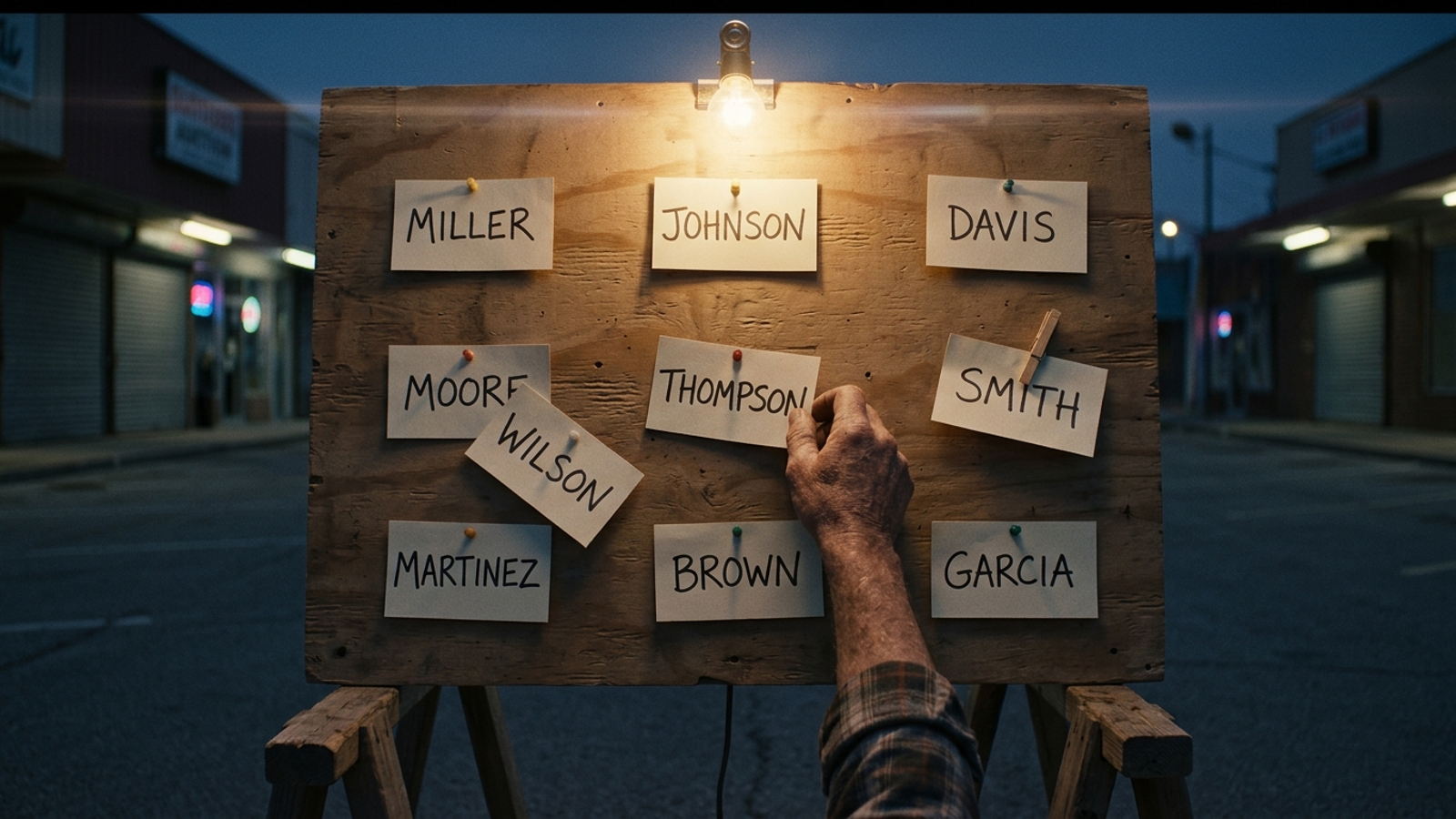
Belief 2: “There’s a position, like rank 3”
This is the screenshot problem. A familiar search result invites a familiar conclusion: I am third, or I am absent, so I know where I stand. In PPC, at least you could put a position-like observation beside broader auction data. Here, treating one answer as a fixed spot sends you chasing a layout that may look different on the next run.
In a study that ran 10,000 identical queries 50 times each, answers were materially different 34% of the time, and brands were added or removed 21.4% of the time. Brand citation consistency averaged 72%. That does not make the results useless. It makes the screenshot the wrong unit of measurement.
Separate two things that often get collapsed into “visibility”:
- A mention means the answer names your brand.
- A citation means the answer links to your site.
Then track mention rate and share of voice by engine with a fixed set of 20 to 50 buyer-worded prompts, asked logged out two or three times each and repeated weekly. If you need a starting method, use the 30-prompt test. Keep ChatGPT and Perplexity in separate columns.
Stop asking “Where do I rank?” Ask “In what share of runs do we appear?” That question can guide work. A screenshot mostly starts arguments.
Belief 3: “My homepage should be the source”
The homepage feels like the strongest page. It has internal links, it ranks for the brand, and in paid search it often becomes the default landing page when nobody has built anything better. So the owner polishes the hero copy and waits for ChatGPT to quote it.
I know the appeal of that plan. One page, one approval cycle, one tidy box checked. Its cost is a page that says a little about everything and answers nothing start to finish: five services, three audiences, a paragraph about quality, and no passage a reader could lift without bringing the rest of the site along.
A specific page has a better shot at giving an engine something usable. In an audit of 15 domains and 7,500 ChatGPT referrals, the strongest predictor was a short, standalone answer capsule just after a heading; more than 90% of cited capsules had no links inside. The mechanism is less mysterious than the phrase answer capsule makes it sound. If the passage answers one question on its own, it is easier to extract.
Build for the question, not the homepage. Give each buyer job a suitable page with a 40-to-60-word answer block that makes sense without the surrounding copy. The homepage can still explain the business. It does not have to do every other page’s job too.
Belief 4: “If Google ranks me, ChatGPT will cite me”
This is the most common belief I hear, and the most costly. Google is the scoreboard owners already know. If a page climbs to page one, it feels reasonable to expect an AI answer about the same topic to pick it up.
But the retrieval paths differ. An analysis of 129,000 domains found that around 90% of ChatGPT citations came from outside Google’s top-20 results. A Google ranking can be useful without being a citation guarantee. If you watch only that ranking, a smaller competitor can keep appearing in answers while you keep improving the wrong scoreboard.
This is where the PPC habit of checking the actual surface helps. I would not judge one campaign by another campaign’s report. I would not treat ChatGPT, Perplexity, and AI Overviews as one report either. Their answers need checking separately, alongside the pages each one draws on. If you need help deciding where to begin, read which citation path to fix first before another round of rewrites.
Check Bing visibility and passage clarity alongside Google rank. Keep the Google work that earns its place, but do not let page one stand in for evidence that you are being cited.
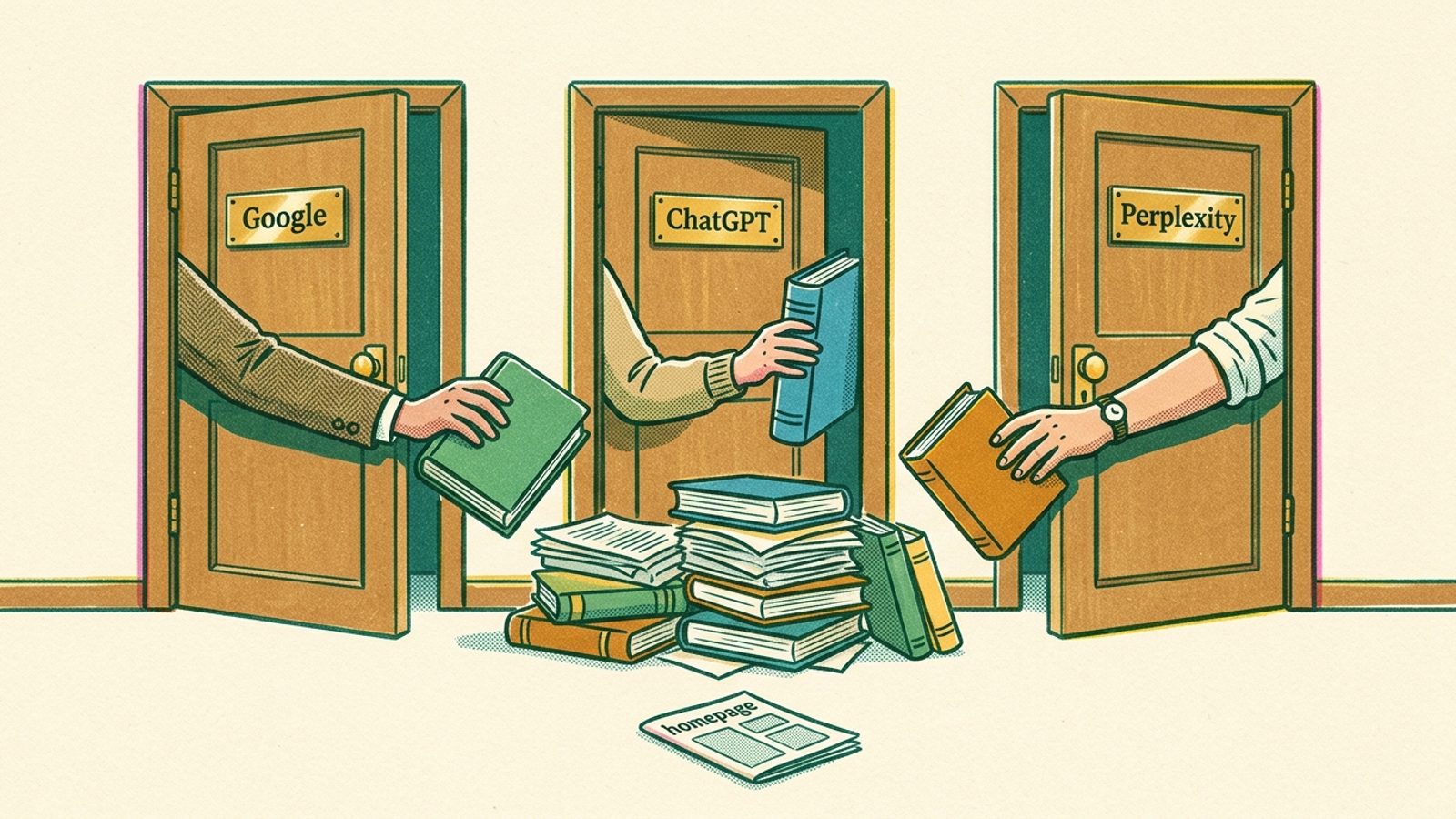
Belief 5: “It’s all on-site”
This is the landing-page reflex. In PPC, the page often is the lever: fix the headline, fix the experience, work on CPA. Carry that instinct into citation work and the plan becomes a site rewrite, followed by another site rewrite. Meanwhile, the answer may be drawing on places where other people discuss your business.
For ChatGPT especially, third-party mentions can matter; Reddit presence has been reported as correlating with 3.9 times the citation likelihood and Quora presence with 4.1 times. That is a correlation, not a promise that posting in a forum will produce a citation. The practical point is narrower: a clear page on your site does not cover every source an answer may use.
What the deck calls “authority,” I call other people vouching for you where the engine is already reading. A small shop that is clear on Bing and discussed on Reddit can appear ahead of a larger competitor that only polished its own pages. If you ignore those outside discussions, you can spend the whole first stretch adjusting copy without touching a visible reason the competitor shows up.
Pair on-site answers with off-site mentions. For every answer capsule you build, look for one quotable mention you can earn elsewhere. Start with review and forum pages that already rank for your category. Do not confuse writing about yourself with getting someone else to say something useful about you.

Belief 6: “Monitoring is the work”
A dashboard feels like management. PPC trained plenty of people to accept a weekly PDF of impression-share charts as proof that someone was optimizing the account. Citation tracking can repeat the trick: buy a tracker, receive a chart, feel covered.
The cost is paying for the grade and skipping the homework. If the same pages and off-site mentions sit untouched while you inspect the score every Monday, the tracker has not failed. It has measured the lack of change rather faithfully.
A tracker is a thermometer, not the treatment. Visibility tools measure performance rather than improve it; useful ones prompt on a schedule and average many runs because the same prompt can return different brands. That averaging is valuable, but it has a limit. API sampling can differ from what a signed-in user sees with memory and personalization switched on. Treat the result as a trend for your fixed prompt set, not a headcount of customers.
Buy the measurement only if you will act on it. Get one clean weekly read on mentions and citations for each engine. Then put the effort into changing passages and earning mentions that might move the next read. A nicer chart is not an intervention.
Belief 7: “One push and it sticks”
This is the launch mindset from paid search: build the campaign, let it run, check back later. For citations, the pause can undo the work. Perplexity re-runs live search for most queries, making freshness and recency part of the process. An answer that drew on your capsule in March can draw on a clearer competitor page in May. Or your own page can stop being fetchable after a redesign. Neither change announces itself with a polite email.
The expensive version of this belief is not merely losing a mention. It is doing the writing, earning the visibility, then assuming the source remains available and useful without checking either condition. That is why I would inspect access before commissioning another rewrite.
OpenAI treats OAI-SearchBot for search answers and GPTBot for training separately. A site that blocks OAI-SearchBot will not appear in ChatGPT search answers apart from navigational links; changes take about 24 hours, and Perplexity likewise respects robots.txt for PerplexityBot. Do not treat a GPTBot setting as a substitute for checking search access. First find out whether the relevant bots can reach the site. Then find out whether the answers they can reach still deserve to be used.
Check access, then keep earning the citation. Verify OAI-SearchBot and PerplexityBot, revisit the passages and mentions, and assume a citation is rented rather than owned.
What to measure this week, and what I still can’t call
If you take one sequence from these seven beliefs, make it this one:
- Check access. Confirm OAI-SearchBot and PerplexityBot can fetch the site before rewriting a word.
- Measure share across runs. Ask a fixed set of 30 buyer prompts while logged out, two or three times each. Record mentions and citations separately for ChatGPT and Perplexity.
- Change one page. Find a prompt cluster where competitors appear and you do not. Rewrite one relevant page so it carries a clean answer capsule for that job.
If you want day-by-day pacing for the longer loop, follow this 30-day playbook for getting cited in ChatGPT and Perplexity. The order matters: access, share across runs, then one page. Most owners start with the homepage because it is the page they can see.
The belief I am still not sure about is “Citation share will settle into a stable score.” Part of me wants something as readable as impression share, a number I can put on a report and compare without a long explanation. The operator in me suspects the noise is here to stay. Engines that re-retrieve can keep reshuffling sources, leaving us with continuous revision and mention earning rather than a fix we complete once.
That is why I do not recommend a tracker subscription on its own. groas does the unglamorous part around the clock, resampling prompts and changing pages when share slips, while a dashboard by itself just watches. I am confident the screenshot era is over. I am less confident anyone will miss it.