

 LinkedIn

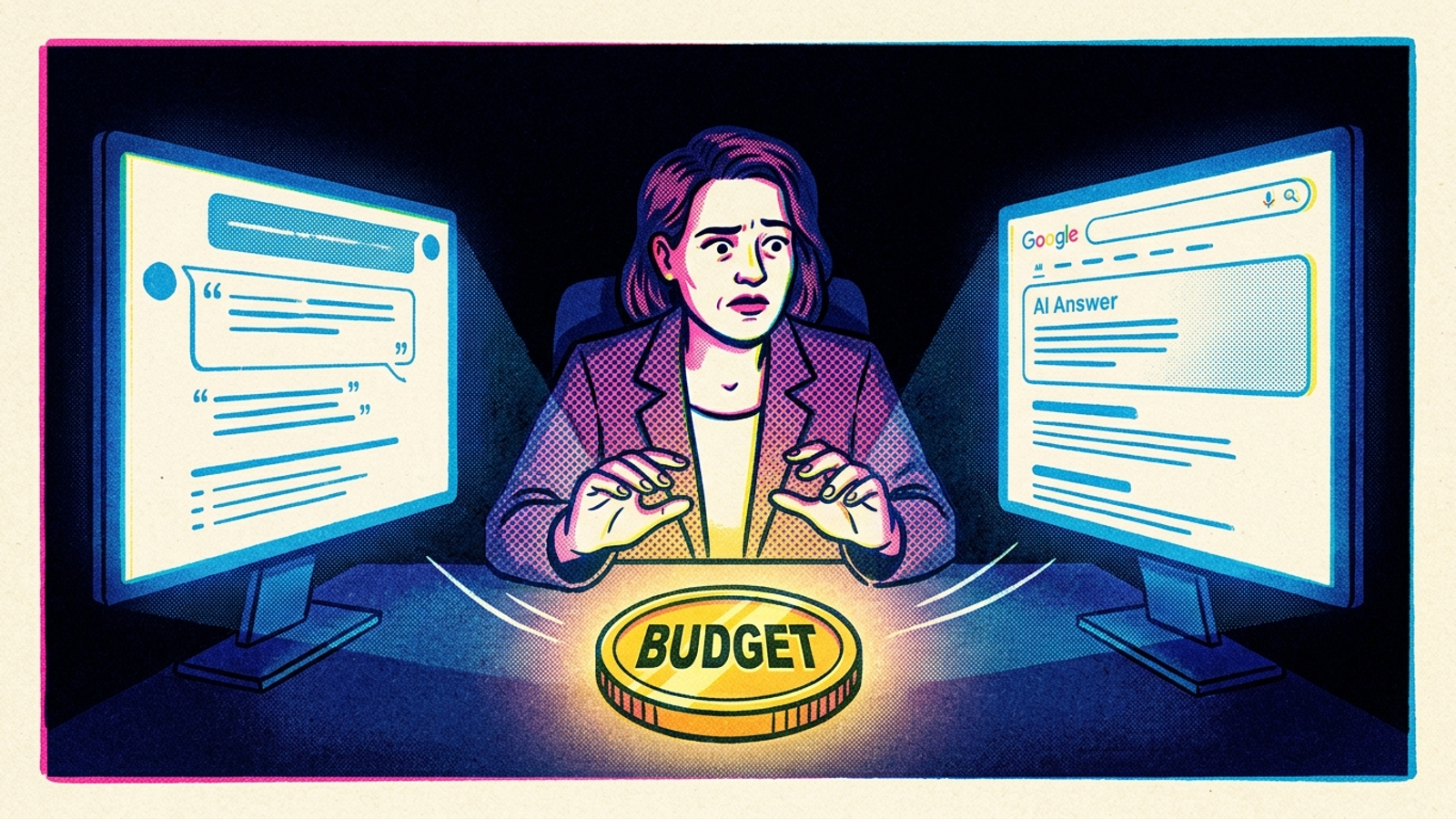
Most agencies will tell you this is one job called optimizing for AI. It is not. ChatGPT and Perplexity are competing with Google AI Overviews for your content budget, and if you run a business that can fund only one serious push, you need to pick the engine your buyers use before a purchase.
In one corner: ChatGPT and Perplexity, which fetch sources for an answer and synthesize what they find. In the other: Google AI Overviews, built on Google’s own index. I used to tell clients to write one great page and let every engine sort it out. I was wrong. I’ve watched pages ChatGPT quoted for weeks never appear in an Overview, while pages Google loved went ignored by Perplexity after they grew stale. Pick the engine your buyers use to research purchases, win there, then carry the useful work across.
First, understand the two citation games
ChatGPT and Perplexity do not select sources exactly the way you learned to think about Google rankings. They retrieve candidates for a query, then build an answer from what they pull. ChatGPT Search tends to show just 2 to 4 citations per answer versus 8 to 10 on Perplexity, and a page blocked from OAI-SearchBot cannot enter its search-fetch pool. If the bot cannot fetch your page, that page cannot earn a citation from the fetch.
Perplexity is more systematic: it interprets intent, pulls 10 to 30 candidates from an index of 200 billion URLs plus partners, then reranks for relevance, semantic match, quality, and time decay. Its answer may carry 5 to 10 inline citations. Those are still scarce slots. A page has to give the engine a reason to choose it over the other candidates it found.
Google AI Overviews start from the opposite end: Google’s index and something close to its ranking system. That sounds like classic SEO until you look at the split. Across 55,393 queries tracked for 40 days, 29.8% of domains cited in Overviews did not appear in the page-one organic results shown alongside them. Ranking third does not mean the citation follows. Google uses its index as raw material, then makes another selection for the answer.
The working distinction is simple: ChatGPT and Perplexity need content they can retrieve and use for the answer at hand; Google also depends on what it has indexed and assessed. That is why AI assistants cite some businesses and skip others even when the pages look similar to a human reader. Do not confuse being findable in one engine with being chosen by another.
Axis 1: What does each engine quote?
ChatGPT needs a passage it can use in a short answer. Perplexity also gives you ways to make the surrounding page easier to assess. That difference should decide your edits, not send you off to write three separate articles about the same thing.
For Perplexity, a practical page structure is a definition-first, self-contained passage of 150 to 300 words, supported by FAQ schema, a comparison table where one helps, and refreshed dates and stats on a 2-to-3-month cadence. Clear headings help expose the relevant passage. A table makes a comparison easier to extract. Outside mentions give the engine context beyond your own claims. None is a magic checkbox, but together they make the page easier to use.
ChatGPT has fewer citation slots and often leans on recognized entity anchors: in plain English, brands and sources it has seen cited elsewhere. The engines’ preferences can diverge sharply. In one 480-question test covering 16,069 citations, Reddit appeared in 68.1% of Perplexity answers and 38.3% of Overview panels, but only 2.9% of ChatGPT answers. Same web, different selection.
For this axis: write one answer-first block a chatbot can quote. Give Perplexity clear structure around it, and work on outside recognition rather than assuming your own page establishes trust by itself.
Axis 2: How quickly can an edit matter?
Perplexity moves fast in both directions. About half its citations point to content published in the previous year, with decay starting 2 to 3 months after publication. A useful page can lose ground to a fresher one when its dates, examples, or comparisons stop reflecting the current choice. I learned that the irritating way: a comparison table I was proud of held its Google ranking for six months while its Perplexity citations faded after ten weeks.
ChatGPT can respond quickly when its search bot can reach a page and the passage answers the prompt. Google generally asks for more patience: it has to recrawl, reindex, reassess, and then select the page for an Overview. None of those timelines is a promise that publishing on Tuesday gets you cited by Friday. They do tell you what kind of operating rhythm you are buying.
For this axis: if you need feedback this quarter, start with fetchability, extractable answers, and a refresh schedule. If Google is your primary engine, budget time for the index to catch up instead of declaring the page a failure after a week.
Axis 3: What can you actually measure?
This is where reporting falls apart. I’ve seen businesses pay for dashboards that count the wrong thing and then call the chart a strategy.
Google includes AI Overview clicks and impressions in the normal Search Console Performance report under Web search type, without separating those clicks. Your Overview activity sits inside ordinary organic reporting. A third-party Overview tracker such as Authoritas or ZipTie can help you see appearances that Search Console does not break out; branded-search changes provide another piece of context, not a clean citation count.
ChatGPT and Perplexity have a different blind spot: a citation without a click does not appear as a referral in GA4. Check chatgpt.com and perplexity.ai referrals for visits. Check server logs for successful requests from OAI-SearchBot, PerplexityBot, ChatGPT-User, and Perplexity-User to see whether those agents are reaching your pages. A bot request does not prove you earned a citation, and a citation does not promise a visit. That is why live-answer checks tell you more than rank trackers early on.
For this axis: measure access, appearances, and visits separately. If you roll them into one number called AI visibility, you will not know what to fix.
Axis 4: Is the citation worth a visit or a mention?
A Google citation can buy you visibility without buying you the click. In an Ahrefs study of 300,000 keywords, AI Overviews correlated with 58% lower click-through for position one, from 0.073 to 0.016 for affected keywords. Position two was down 50.8%; position three, 46.4%. When the answer satisfies the query on the results page, a citation can show that your page was used while the reader stays put.
ChatGPT can play a different commercial role. In August 2026, ChatGPT drove 95.1% of AI-platform referral traffic after 101% growth since January, about 22 times Gemini, Perplexity, and Claude combined. Fewer citations in an answer do not automatically mean fewer valuable visits. The important question is whether the buyer needs to leave the answer to compare, verify, or buy.
For this axis: fund Google when being seen at the moment of search matters most. Fund chat retrieval when the citation is part of a research path that can send the buyer onward. Do not price every mention as though it were a click.
Axis 5: What work will you keep paying for?
Google costs you patience and authority work. You need an indexed page, a recognizable entity, corroboration beyond your own site, and time for recrawls. What the deck calls synergy, I call two people doing the same job: some Overview work is classic SEO you should already be doing.
ChatGPT and Perplexity cost you cadence. If comparisons, prices, dates, or stats drive the answer, you cannot publish once and ignore the page. You need to keep the quotable passage and its supporting details current. Say you spend $20k a month on content and SEO. I would rather put $14k behind the primary engine and $6k into maintaining the other than split it $10k and $10k without giving either side enough attention. That is an allocation rule, not a guaranteed return.
For this axis: Google is an authority investment with slower feedback. ChatGPT and Perplexity demand a tighter publishing-and-refresh loop. Pick the workload you can sustain where your buyers actually are.
Do the shared work once, then choose your primary engine
The overlap is real, but smaller than most checklists imply. Build one clear answer block per page. Make the business identifiable to Google and the assistants. Keep important pages accessible to the relevant bots. Earn an outside mention that shows the business exists beyond its own website. That foundation helps across engines, which is why the full three-engine comparison starts with the same page structure.
Then the work splits. For ChatGPT and Perplexity, spend on passages that stand alone, useful tables, and a refresh cadence. For Google, spend on internal links, corroborating coverage, and pages the index can assess. Do the shared base once. Put the remaining budget behind the selection process your primary engine uses.
| Decision axis | ChatGPT and Perplexity | Google AI Overviews |
|---|---|---|
| Source selection | Retrieve candidates, then synthesize an answer with limited citation slots | Use Google’s index, then select sources for the answer |
| What gets quoted | Clear, extractable passages; supporting structure and current details | Indexed pages with authority and answer fit; organic rank alone does not guarantee a citation |
| Speed | Faster feedback, with a need to refresh time-sensitive material | Recrawling and reassessment can take longer |
| Measurement | Bot requests, answer appearances, and referrals are separate signals | Search Console includes activity in Web reporting; a separate tracker helps identify appearances |
| Commercial value | A citation can send a researching buyer onward | A mention can be valuable even when the answer keeps the click |
| Cost to compete | Ongoing extraction and refresh work | Authority building and delayed feedback |
If your buyer asks a chatbot to shortlist vendors, every week spent waiting on Google leaves the chat answer to someone else. If your buyer starts on Google for a plumber or an emergency dentist, every cycle spent polishing a Perplexity table takes money from the surface they actually see. Fund the engine in front of the purchase. Maintain the other.
Verdict: put 70% behind the buyer’s first stop
Here is the rule I give clients when the budget covers one serious fight: find out which engine your buyer opens when they are close to spending, put 70% of the effort there for 30 days, and keep the other on a minimum dose. That is not hedging. It is sequencing. Ask where your last ten customers started rather than where the marketing team wishes they had started.
Local and service businesses: start with Google
If you sell a booked job, a table, or an emergency call and your buyers start on Google, give Google the primary budget. Build one quotable service page per money term, link to it from the homepage and relevant location pages, and seek an outside mention that confirms the business is real. Keep a fresh answer block available to ChatGPT and leave bot access open, but do not let that maintenance work eat the Google budget.
B2B and considered purchases: start with chat
If buyers use a chatbot to compare software, vendors, or a $20k contract before building a shortlist, give ChatGPT and Perplexity the primary budget. Limited citation slots make an easy-to-extract answer worth the effort. Spend on definition-first passages, comparison tables, useful FAQ schema, and reviews of time-sensitive details every 8 to 12 weeks. Maintain the same base pages for Google and let index work follow. Win the shortlist before you polish the backup route.
Ecommerce: win the recommendation, then defend Google
If your buyers shortlist physical products in chat and check prices on Google, I would put the larger share into ChatGPT and Perplexity too. Give a product-category page a quotable answer, specs in a table, and current price and availability in text rather than only in JavaScript. Review it every 8 to 12 weeks. Use the remaining effort to keep that page cleanly indexed for Google. The aim is straightforward: be present when the product gets recommended, then remain visible when the buyer verifies the choice.
A 30-day test for the engine you chose
- Week 1: check access and choose five purchase prompts. Confirm
OAI-SearchBot,PerplexityBot,ChatGPT-User, and Googlebot can get successful responses from your five most profitable pages. Write down five prompts buyers use before they pay. - Week 2: make each page answer its prompt. Put a self-contained 150-to-300-word answer near the top. Add a comparison table where a choice needs explaining, and FAQ schema where the questions genuinely belong.
- Week 3: add outside proof. Look for one relevant directory listing, supplier page, or local press mention. Your site should not be the only place an engine can establish who you are.
- Week 4: check the signals separately. For Google, compare Search Console activity with appearances in an Overview tracker. For chat engines, look at referrals, server-log requests, and actual answers. Note which pages get fetched, which get cited, and which send visits.
If nothing moves in 30 days, do not assume the article needs a sixth page. Check access and the answer passage first. Then check whether you chose prompts your buyers use. Fix the bottleneck you can observe before you buy more content.
I run this sequence inside groas now because I got tired of selling the audit and never getting to the edits. The models handle fetch checks, passage rewrites, and refresh work; a named strategist owns the decision about which engine gets the 70%. No dashboard to interpret, no junior hire learning on your budget. Pick the engine in front of your next sale, fund it properly for 30 days, and leave the other on maintenance until you have won the first fight.