

 LinkedIn

By October 2027, buying an ad beside an AI answer will be routine, but for considered purchases, the earned citation beneath that ad will be the more valuable placement. That is my bet after watching paid inventory expand, prices rise, and buyers learn to look past the sponsored slot.
I watched versions of that cycle play out with desktop AdWords, Google Shopping after its 2012 commercial pivot, and local map packs. The surface changed. The mechanism did not: a platform sells prime real estate, more advertisers compete for it, and buyers get better at distinguishing the placement from the answer they came to find.
The rollout of Search and Shopping ads in AI Overviews has given marketers a comforting story: whatever traffic generative summaries take away, we can buy back through Google Ads or a future chat ad unit. For considered B2B and high-ticket consumer purchases, I think that story misses the point. An ad tells a buyer who paid to appear. A citation tells them what the answer drew on.
Here are five predictions, containing six claims you can check in October 2027. First, a boundary worth keeping in view: Google allows Performance Max, Shopping, and broad match Search campaigns to appear within or alongside AI Overviews, while reporting bundles that spend under general “Top Ads” without a dedicated placement tag or opt-out toggle. OpenAI’s ad tests put sponsored blocks below generated responses rather than writing paid copy into the answer. You can buy space around the answer. You cannot buy the sentence it uses to resolve the query.
Prediction 1: AI answer ad inventory expands, and CPCs rise
Why I expect it
AI Overviews and AI Mode take up prominent space on the results page. As Google puts generative answers in front of more commercial and comparison queries, it has a reason to sell inventory on that surface. Advertisers, meanwhile, have a reason to follow buyers there. Put more bidding dollars against a small number of conspicuous units, and auction prices face upward pressure.
I have seen what a layout change can do to an account. When Google removed right-hand sidebar ads, advertisers had fewer familiar places to compete for attention. The AI answer is a different layout change, but the account-level problem is recognisable: you still need qualified traffic, and you have limited control over where an automated campaign finds it. Today’s intermittent AI Overview ads and bundled reporting make that pressure harder to isolate, not less real. More AI ad inventory does not mean a cheap new channel once everyone wants the same commercial queries.
What would prove me wrong
If click-through rates are too weak to sustain advertiser participation without deep discounts, CPCs could stagnate. If query volume moves en masse to subscription-only search engines that refuse advertising, the auction pressure I expect will not arrive. Granular placement reporting and a separate way to bid on AI Overview ads would also weaken my claim that advertisers must accept an expensive, bundled slot.
For now, I would not treat an AI Overview appearance as a bargain hiding inside an existing campaign. I would watch what it costs to acquire a customer.
Prediction 2: Chat ads stay outside the cited answer
Why I expect it
OpenAI began testing ChatGPT ads on February 9, 2026, for logged-in users on its Free and $8-a-month Go tiers. It placed ads below generated responses and alongside image generation, and said its ad systems could not alter the model’s output. Perplexity took a different route to the same boundary: after testing sponsored follow-up questions at $50-plus CPMs with brands including Whole Foods and Indeed, it ended that ad test.
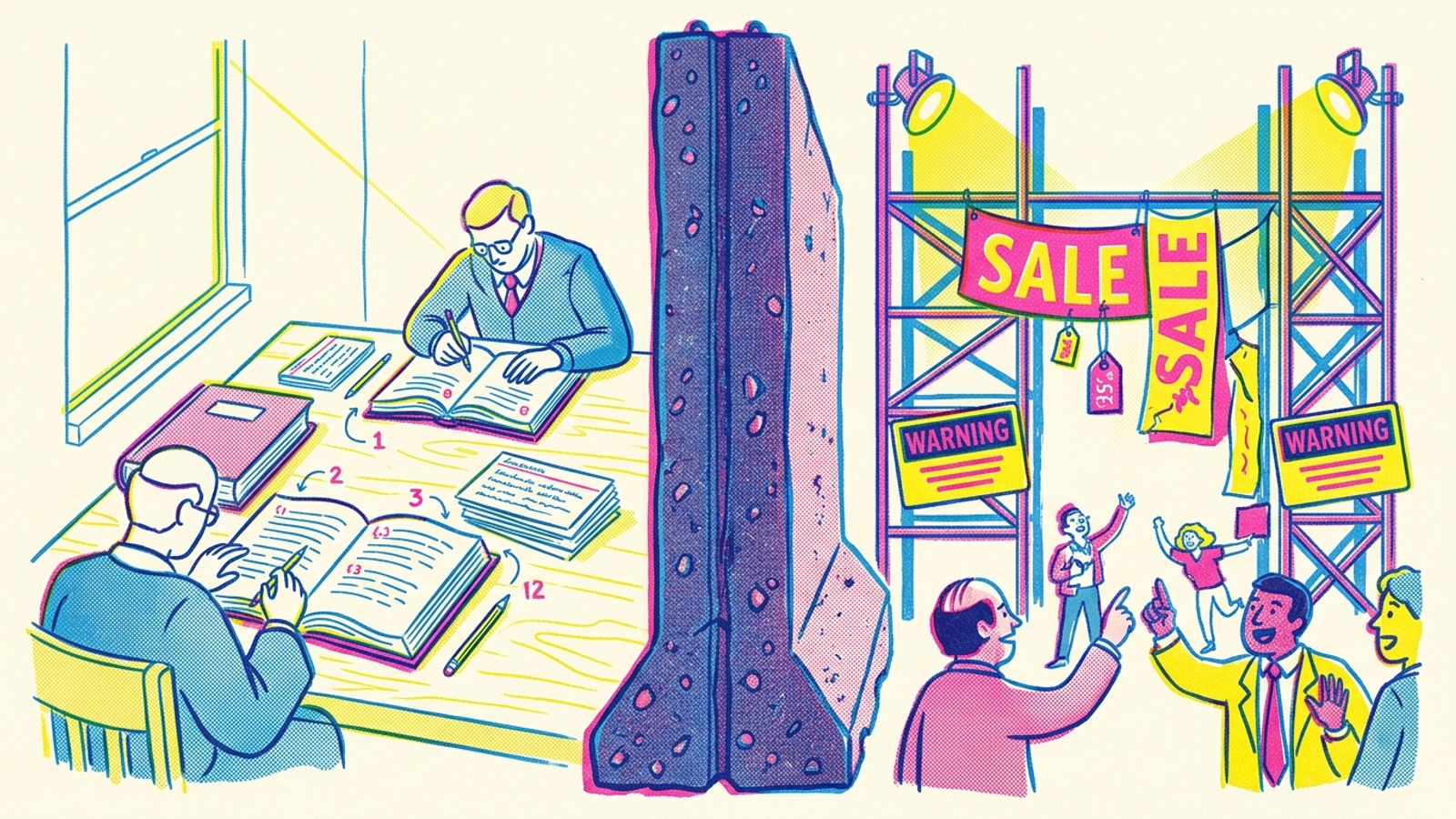
The distinction matters because an ad is an auction result and a citation is offered as support for a generated claim. Put sponsored language inside the claim without a clear border, and the reader has to second-guess the whole answer. That is a poor trade for a product people use to get through a question quickly. I expect paid placements to stay visibly separate from the prose and its source links.
What would prove me wrong
If OpenAI, Anthropic, or Google puts unlabelled sponsored sentences directly into model-generated answers without visual separation, and that approach remains viable, this prediction fails. I am not betting on it. Selling a block beside the answer is one thing; selling the apparent reasoning inside it risks making the answer itself look like an ad.
Prediction 3: For considered purchases, cited sources beat the ad above them
Why I expect it
When an executive compares enterprise software or a homeowner investigates foundation repair, the highest bidder is not necessarily the most useful next click. They want to check the evidence. AI Overviews make that behavior especially important: the summary may satisfy a quick question, while a buyer making a consequential decision still has a reason to open the underlying source.
Seer Interactive’s study across 42 organizations and more than 25 million impressions found that when an AI Overview appeared, traditional paid CTR fell 68%, from 19.7% to 6.34%, while organic CTR fell 61%, from 1.76% to 0.61%. Being cited was a meaningful exception: cited brands earned 35% more organic clicks and 91% more paid clicks than uncited rivals. In its Q1 2026 update covering 5.47 million queries, Seer reported a 120% lift in clicks per impression for cited sources.
Those figures do not prove that a citation already beats the ad directly above it on every query. They do show why I am willing to make the prediction. An Overview reduces clicks in general, but a link presented as evidence gives the buyer a specific reason to leave the answer. For a considered purchase, verification is the click worth winning.
What would prove me wrong
Low-consideration ecommerce could go the other way. If price and delivery speed settle the decision, an embedded Shopping carousel may capture most conversions. My prediction concerns buyers who verify a vendor before requesting a quote or booking a call. If 2027 click and conversion logs show uncited advertisers in top AI Overview ad units consistently beating cited source domains on B2B queries, I will retract it.
The practical split is simple: keep buying ads for immediate intent, but do not assume the paid placement replaces the source link a careful buyer wants to inspect.
Prediction 4: A few domains dominate citations for each industry question
Why I expect it
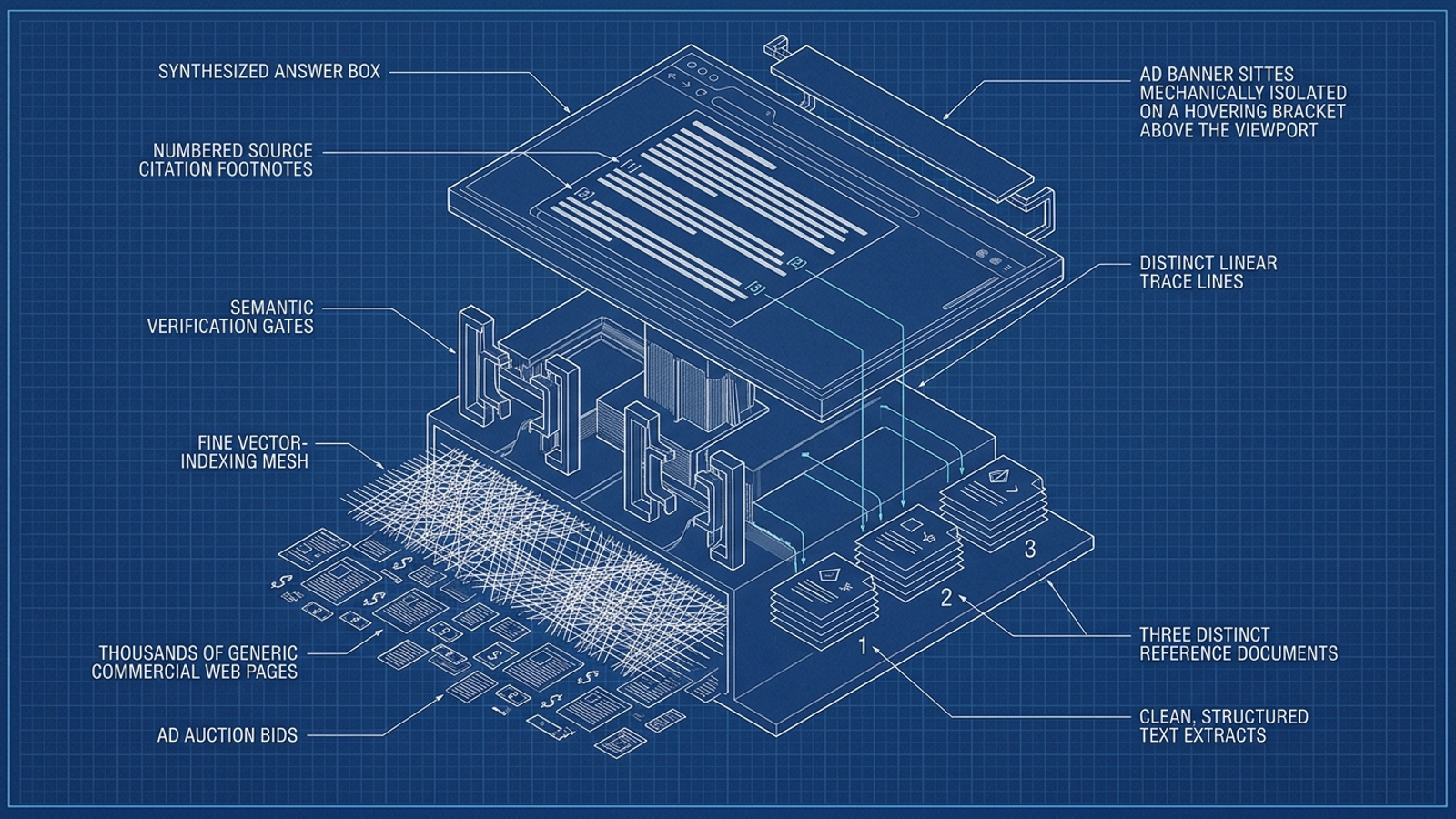
Traditional search could show ten distinct domains on a first page. A synthesized answer has less room to show its work. Retrieval-augmented generation pulls passages into an answer and attaches a limited set of sources; it does not need to reproduce the whole results page. I expect three to five cited domains per industry-specific query to become the pattern that matters to operators.
The existing results already warn against treating old rankings as a reliable proxy. In Ahrefs’ study of 300,000 keywords, position-one organic CTR fell 58% when an AI Overview appeared. Only 38% of AI Overview citations also ranked in Google’s top ten organic results, down from 76% in mid-2025. Another 31% came from positions 11–100, and 31% from beyond page ten.
That does not mean the same five domains own every answer. It means a site can win a source slot without owning a traditional top-ten position, while a top-ten position cannot guarantee a citation. If a domain repeatedly supplies clear answers to related questions, it has a better shot at appearing across those answers. An ad above them cannot substitute for that work.
What would prove me wrong
If models routinely cite a wide, changing spread of obscure sites across closely related prompts, consolidation will not happen. If users turn away from synthesized answers and return to scrolling traditional results, the citation slot will matter less. I would check both the number of unique domains cited and how often the same domains recur, rather than declare a winner from one prompt.
Prediction 5: Teams measure cited-source share, not mentions or ad spend
Why I expect it
This prediction contains two claims. By 2027, serious operators will judge AI visibility by cited-source share: the proportion of buyer-intent queries for which their domain is a clickable source. And businesses that rely only on ads will not gain that share merely by spending more.
I have written about AI visibility software that logs who gets mentioned rather than who gets cited. A brand name in a generic list beside six competitors is not the same as a source link a buyer can follow. Mentionova’s analysis of 150,000 LLM citations found that branded web mentions correlated with citations more strongly than backlinks did (0.664 versus 0.218). It also found considerable volatility: citations lasted an average of 2.15 days, and roughly 45.5% changed between model updates. A static prompt screenshot is a shaky thing to call a reporting system.
Ad spend has a separate job. A paid click to a thin, gated landing page does not put a useful explanation on that page. If you spend $40,000 a month sending traffic to three bullets and a lead form, an answer engine has little there to quote. A competitor publishing accessible benchmarks, pricing teardowns, or operational explanations gives it more substance to draw from. The auction can buy an impression; it cannot turn an empty page into evidence.
What would prove me wrong
If AI interfaces abandon clickable sourcing, cited-source share stops being a useful measure. If reporting remains focused on unlinked mentions and clients see no reason to demand more, my reporting prediction fails. And if brands with little open, substantive content reliably gain organic citations just by increasing ad spend, my paid-only claim fails. Those are distinct tests; I would not hide either behind an “AI visibility” score.
What I would do this quarter
I would not cut paid search. It still captures active transactional intent, tests value propositions, and helps maintain acquisition volume. I also would not pay for a deck of speculative prompts and call it an authority strategy. I would work through three jobs, in order:
- Map decision-stage questions. Use the paid search query log for more than negative keywords, then identify the comparative questions buyers ask that those campaigns do not show you. Work out where to pursue citations first: transactional questions in Google AI Overviews and research-heavy comparisons in ChatGPT or Perplexity call for different answers. Start where a buyer hesitates before choosing.
- Publish an answer that can be quoted. Cut the corporate windup. Give the page clear definitions, direct comparisons, and verifiable details instead of burying the useful paragraph behind a form. Our 30-day playbook for getting cited in ChatGPT and Perplexity lays out how one operator can approach that work. A crawler cannot lift an answer you have not made available.
- Earn corroboration off your own site. Your page is only one account of your business. Specialist forums, community discussions, third-party teardowns, and industry directories give an answer engine other places to encounter and check a claim. Honest discussion beats repeating the same assertion in more ad copy.
At groas, that is why we run paid search execution and organic citation work together: specialized models handle bids, budgets, and query mining continuously while a dedicated senior strategist oversees direction. The point is not to make an ad do the job of an earned source, or the source do the job of an ad. It is to stop paying for attention while leaving the answer to someone else.
The October 2027 scorecard
Predictions need a test, not a victory lap assembled afterward. These are the signals I would check in October 2027.
| Prediction | What to check | What would prove me wrong |
|---|---|---|
| 1. More inventory, higher CPCs | CPCs on AI Overview-eligible commercial auctions | CPCs stay flat despite sustained advertiser participation |
| 2. Chat ads stay separate | Whether sponsored text enters generated prose | Unlabelled paid language becomes part of answers without visual separation |
| 3. Citations win considered-purchase clicks | Clicks and conversions from cited sources versus top ads on B2B queries | Uncited top advertisers consistently beat cited domains |
| 4. Citations concentrate | Unique cited domains across related industry prompts | Answers regularly draw from a broad, changing spread of domains |
| 5. Reporting follows sources, not spend | Clickable cited-source share, mention-only reports, and paid-only brands’ citations | Mentions remain sufficient to clients, or ad spend alone reliably lifts organic citations |
Ad platforms charge for attention. Buyers making considered purchases still need reasons to trust an answer. If I am right, keep using paid search for the demand it can capture now, then put the explanation a buyer needs on a page they can actually open. Do not try to solve an authority deficit with an ad budget.