

 LinkedIn
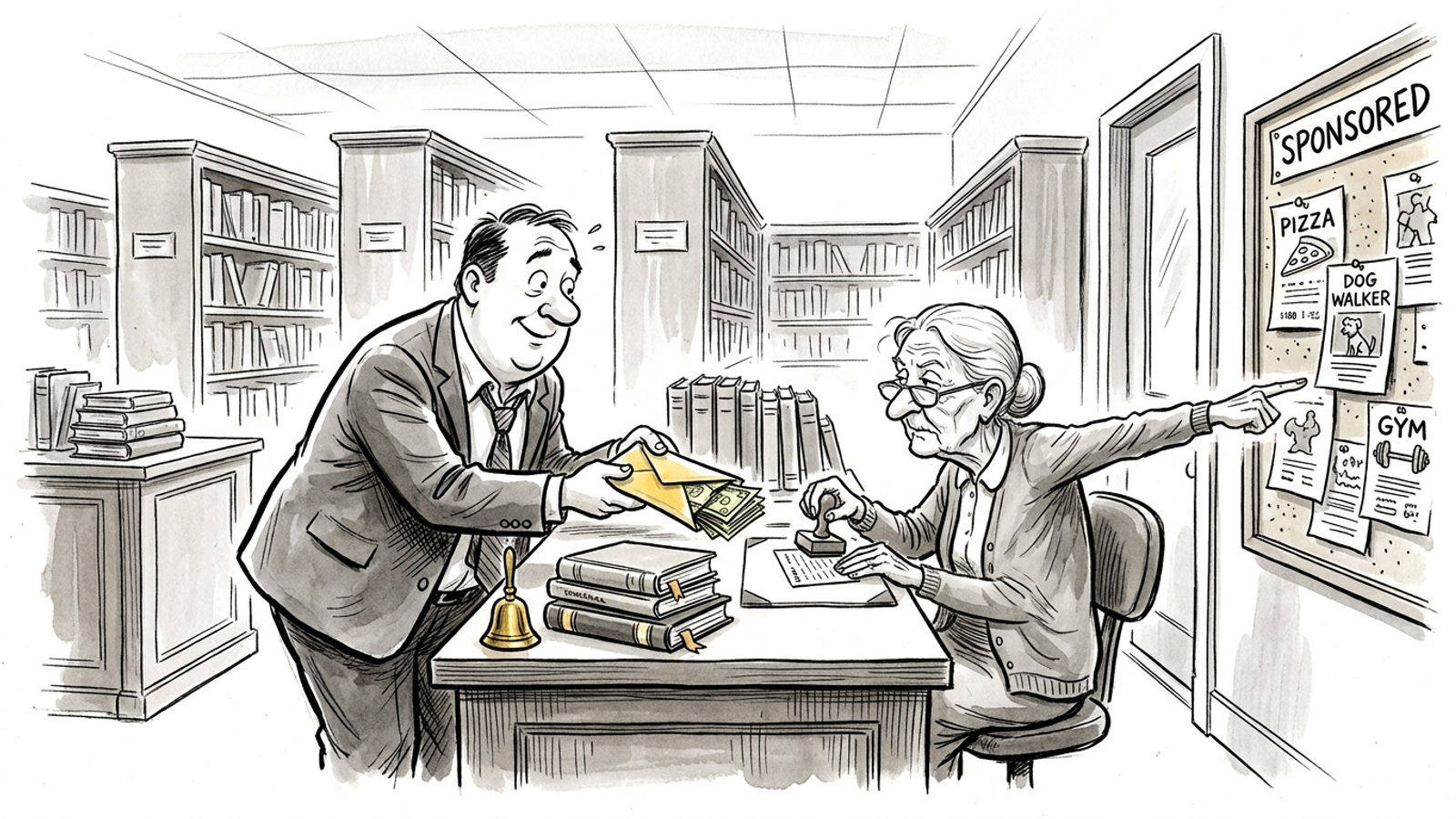
You keep asking about ChatGPT the way you asked me about Google Ads: where’s the bid, where’s the report, can I pay to be there? I get it. Some paid-search habits transfer; the rest can get you charged for a screenshot.
How do I get my business cited as a source in ChatGPT and Perplexity answers?
First, your page has to get retrieved. Then something on it has to be worth citing. I used to tell clients rankings equaled mentions. I was wrong: a page can be visible in search and still give an answer engine no clean sentence to attribute.
A mention names you. A citation links you. Retrieval means the engine read you at all. Those are different outcomes, so they call for different fixes. Perplexity shows sources in footnotes, AI Overviews draw heavily from the Google index, and ChatGPT mixes pretrained knowledge with live browsing. Gaps across engines are normal when you track citations. If an engine retrieves your page but does not cite it, look at the answer on the page. If it never retrieves the page, rewriting the opening paragraph will not solve your crawl or indexation problem.
The levers with numbers behind them are not glamorous. Pages updated in the past 12 months were twice as likely to hold citations; 60% of commercial queries cited content refreshed in the past 6 months; cited ChatGPT URLs averaged 17 times more list sections; and schema lifted citation odds by 13% in the cited analysis. The mechanism is plain: give the engine a current, clear block of information it can lift and attribute.
Pick one money page. Put a direct answer in plain sentences near the relevant question, make an actual list where you have an enumeration, add schema where it fits, and date the update. Then check whether the page gets pulled before you repeat the exercise across the site. Fix the page the engine can’t use, not every page you own.
Is there a Quality Score for AI answers?
No. There is no 1-to-10 score inside ChatGPT waiting for you to improve it. A vendor selling you an AI Quality Score is selling you its own math with Google’s old label stuck on it.
What matters is whether your page gets pulled into an answer and whether a passage on it is useful enough to cite. I work through three checks, in order:
- Can the engine find and read the page?
- Does one passage answer the prompt in plain words?
- Does the rest of the web back up what you say?
That order matters. People polish copy on a page that never gets retrieved, then wonder why the new copy changed nothing. Others build links to a page with no sentence that answers the buyer’s question. Fix retrieval first, the quotable passage second, and corroboration third. If Perplexity footnotes competitors but never pulls your page, start with crawl and indexation, not a new adjective in your headline.
Can’t I just buy my way in with AI Overview ads?
You can buy an ad placement. You cannot buy an organic citation. This is where a paid-search reflex can get expensive.
OpenAI calls its separation answer independence: ads do not shape the ChatGPT answer. Labeled paid placements are separate from the brands the answer names. Google likewise distinguishes Sponsored placements from the sources cited in a summary when explaining AI advertising. A paid placement may appear beside an answer or, on Google, inside an Overview. It is still an ad, not a citation.
On Google, AI Overviews and AI Mode ad inventory draws on existing Search, Shopping, and Performance Max campaigns. AI Max can widen reach; it does not hand you an AI slot to select as a placement. Google says advertisers cannot target Overviews directly, opt out of them, or get a separate performance report for ads served there; that activity rolls into existing reporting rather than an Overview-only view.
Ads buy a labeled placement. They do not make your business a cited source. Budget for paid reach if it serves your campaign, but do not let anyone sell it to you as a shortcut into the answer.
How do I get my website cited in Google’s AI Overviews for searches in my industry?
Start with a page Google can index, then make its answer easy to extract and worth using. Think of the snippet work you already know, with more attention to a self-contained answer, freshness, and corroboration. A page-one ranking alone is no guarantee that an Overview will cite you; another page may simply answer the same question more clearly.
Work backward from the searches that matter to your business. If the buyer asks a comparison question, a page that buries the comparison under three screens of company history is making the engine do your editing. Put the useful distinction where a reader can find it. That is not a trick for the model. It is a better page for the person who asked.
For ads around that same Overview, keep paid eligibility separate from source selection. Google says ads inside an Overview must match both the query and the Overview content. Broad match, AI Max, Performance Max, Shopping, or keywordless matching with Smart Bidding can help an ad qualify; narrow exact-match builds are less likely to match under those conditions. Use campaign coverage to pursue paid reach. Use a quotable page to pursue a citation. One does not purchase the other.
How can my business measure brand visibility across ChatGPT, Gemini and Google AI Overviews?
Do not build a strategy around one screenshot. Run the same prompt again and you may get different sources. One answer tells you what happened once, not whether your visibility moved.
I would run this like a search-term report, not a trophy cabinet:
- Start with 25 to 40 real buyer prompts across category, problem, comparison, and brand questions.
- Keep the wording consistent and check ChatGPT, Gemini, Perplexity, AI Overviews, and AI Mode in a private window.
- Record whether you were named, cited, where you appeared, and the answer’s tone.
- Repeat weekly for a month before calling the result a baseline rather than a snapshot.
Once the routine works, expand toward your top 50 intent-driven queries. Track mention rate, citation rate, share of voice against your top three competitors, and sentiment. Brand Visibility Score is answers mentioning you divided by total answers, multiplied by 100. Map the movement to demo requests and sourced pipeline rather than treating the score as revenue by itself.
A tool that merely watches prompts can produce a handsome chart without telling you what to change. If your report cannot show what changed since last week, read Your AI Visibility Report Is a Screenshot Until It Shows What Changed before paying for another month. No trend line, no decision. One answer is an anecdote.
Can I automate monitoring in-house, or is that a trap?
You can. A sheet, 30 prompts, and an hour on Monday can give you a useful first tracker. It will show which questions leave your brand out. That is worth knowing.
The trap is treating the tracker as the whole job. Monitoring tools schedule prompts and record mentions; content changes and outreach usually remain separate work after the report arrives. Expand that first sheet across engines, prompts, and repeated checks, and watching alone can take four hours a week. It still has not fixed a page.
Someone then has to rewrite the answer, ship the technical fix, pursue a citation on a site the engines trust, and rerun the prompt to see whether it held. That is where an in-house plan tends to stall: not at the spreadsheet, but between finding the gap and publishing the change. Before you assign it internally, read Should You Run AI Search Visibility In-House? The Cost Is in the Shipping. Automate the watching if you want. Keep the work in-house only if someone owns the shipping.
What tools actually help a business get featured in Google AI Overviews, not just monitored?
Most AI visibility software sold today is a prompt runner with a chart. It checks scheduled questions, logs mentions and cited sources, then leaves the fix to you. I do not object to a tracker. I object to paying for one as though it were the person who will change the page.
The pricing makes that distinction matter. Otterly lists a $29-per-month Lite plan; Peec’s Starter sits around $95 to $100 per month with engine limits; Profound lists $99 per month for ChatGPT-only Starter and $399 per month for Growth; Semrush starts near $499 per month; and seoClarity sits near $3,000 per month. Lite tiers often cap tracking near 15 prompts in the cited tool rundown. Say you need 40 prompts across five engines. Check the limits before you buy the attractive entry price.
Before paying, I apply the action log test. Show me last week’s log: which prompt moved, which page you changed or shipped, and whether the citation stuck when you checked again. A list of gaps does not pass. Neither does a screenshot of one favorable answer. Read Tools That Help You Get Featured in Google AI Overviews, Not Just Monitored with that filter on. Pay for shipped fixes you can connect to repeatable results, not for the number of gaps a dashboard finds.
What should I pay, and how should the fee be tied to outcomes?
Pay a small subscription for watching if watching is what you need. A tracker running 40 prompts across five engines every week does a defined monitoring job. Do not confuse its price with the price of getting cited.
Getting featured takes work: rewrite a page so its answer can be used, remove a technical block so it can be read, get a relevant fact onto a site the engines trust, then rerun the prompt to see what held. Percentage-of-spend pricing makes no sense for that work because there is no media spend to take a cut of. A flat retainer for another PDF of gaps is not much better. That is paying 2015 prices for work that no longer takes 2015 effort.
I would ask a vendor to tie its fee to shipped changes, citations that hold for three weekly runs, and share-of-voice movement on your top 20 money prompts. Get the target in writing before you pay. This does not work for everyone: if you have no page that should rank for the query and no budget to build one, a tool has nothing to get cited. Buy monitoring cheaply, buy fixes against outcomes, and do not pay a percentage for either.
Which ten buyer prompts decide my pipeline, and what shipped last week to win them?
That is the question I wish people asked. Most ask for a visibility score. The better question connects a buyer’s search to a change someone actually made.
In PPC, I learned to ask which search term spent $50 without converting. Here, I want to know which prompt names three competitors but never names you, then which page went live to change that. Ask a vendor and you will find out quickly whether it watches or works. A watcher sends a PDF with 847 gaps. A doer shows the prompt, the shipped change, and the repeated checks that followed.
That is why I do this work inside groas now. Models run prompt sets daily across ChatGPT, Perplexity, Gemini, and Overviews, ship the page or fix, and record each change and its reason. A named strategist owns the target. No dashboard for you to interpret. No junior manager learning on your budget. Next time someone offers you an AI visibility score, ask instead: which ten buyer prompts decide my pipeline, and what shipped last week to win them?